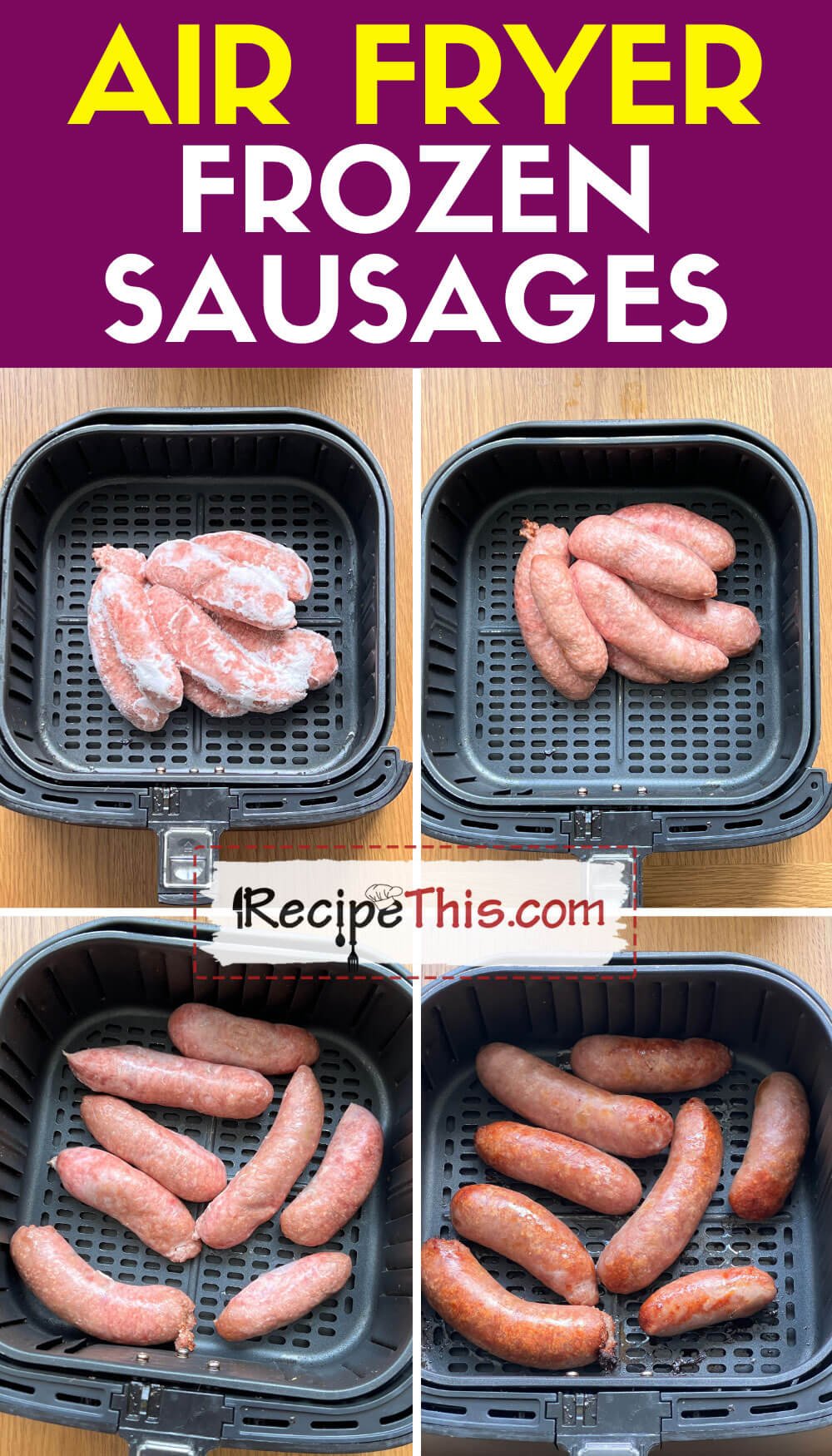
How To Cook Sausages From Frozen In Air Fryer: Fast Guide
Yes — you can safely cook frozen sausages in an air fryer. Cook them in a single layer at 350–380°F and use an instant‑read thermometer to confirm the internal temperature: 160°F for pork/beef/veal/lamb sausages (raw) and 165°F for poultry sausages; reheat pre‑cooked sausages to 140°F. Typical cook times range from about 10–22 minutes depending on size and type.
This guide is written for U.S. home cooks. Temperatures use °F. USDA food‑safety targets and common U.S. air fryer behavior inform the times and safety advice below. Read the quick answer, then follow the step‑by‑step method and troubleshooting for reliable results.
Essential definitions and context you need first
Quick answers:
- “Frozen” means the sausage is solid or partially thawed in the middle when you start cooking it.
- “Fresh/raw sausage” means sausage made from raw ground meat (pork, beef, lamb, or mixed). USDA recommends an internal temp of 160°F for these.
- “Poultry sausage” (chicken or turkey) needs 165°F.
- “Pre‑cooked or smoked sausage” (hot dogs, kielbasa, some bratwurst) only needs reheating to 140°F.
Why the air fryer works:
- An air fryer circulates hot air quickly, speeding browning and shrinking total cook time compared with an oven.
- Because air fryers vary in airflow and wattage, use temperature and time ranges below and confirm doneness with a thermometer.
Safety baseline:
- Always verify internal temperature with an instant‑read thermometer in the thickest part of the sausage, not touching the basket. The USDA internal temps above are the minimum safe targets for U.S. kitchens.

How to cook frozen sausages in an air fryer — step‑by‑step
Answer first: arrange sausages single layer, set the temp by type, cook until internal temp reaches the safe target, flipping/shaking halfway.
Prerequisites (what you need)
- Air fryer sized so sausages fit single layer without crowding.
- Instant‑read digital thermometer.
- Tongs or silicone spatula.
- Optional: small spray of neutral oil, kitchen shears, paper towels.
Stepwise method
- Preheat (optional but helpful). Preheat the air fryer 2–4 minutes to the chosen temperature. Many models reach temp quickly; preheating produces more even browning.
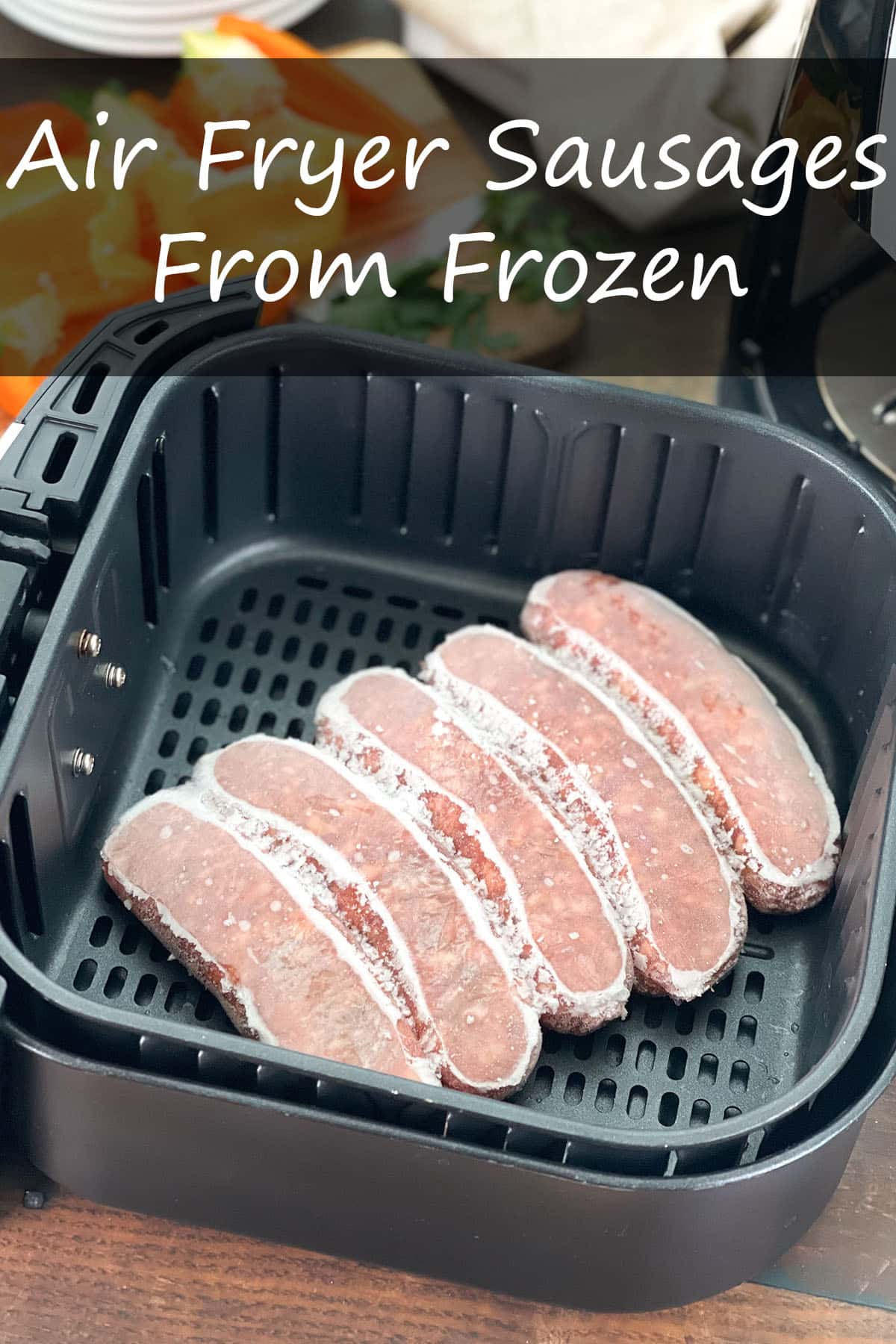
- Arrange frozen sausages in a single layer. Leave small gaps for air flow. Don’t stack.
- Set temperature and initial time:
- Pre‑cooked sausages (hot dogs, smoked): 350°F for 8–12 minutes.
- Small breakfast links (thin): 350°F for 10–14 minutes.
- Regular bratwurst/Italian (raw, 3–4 oz each): 360–375°F for 12–18 minutes.
- Large sausages (4+ oz): 360°F for 18–22 minutes.
- Poultry sausages (raw chicken/turkey): 375°F for 16–22 minutes.
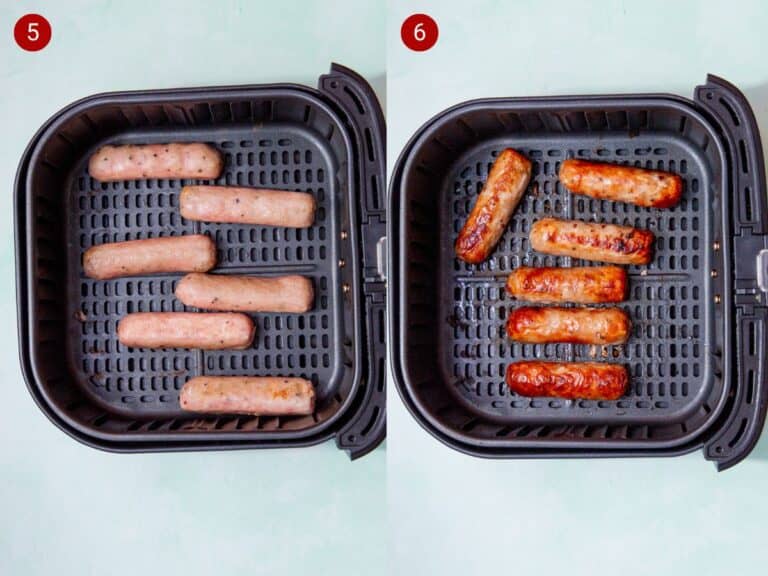
- Start the cycle and flip or shake the basket halfway through the estimated time. Use tongs to turn each sausage so both sides brown.
- Check temperature in the thickest part near the end of the lower bound of the time range. Increase time in 2–3 minute increments until you reach:
- 160°F for raw pork/beef/veal/lamb sausages,
- 165°F for poultry sausages,
- 140°F for reheating pre‑cooked sausages.
- Finish with a 1–2 minute high‑heat burst (optional). If browning is weak, raise temp to 400°F for 1–2 minutes but watch closely to prevent splitting.
- Rest 2–3 minutes after cooking. This helps juices redistribute.
Signs of success
– Instant‑read thermometer reads the target temp in the thickest portion.
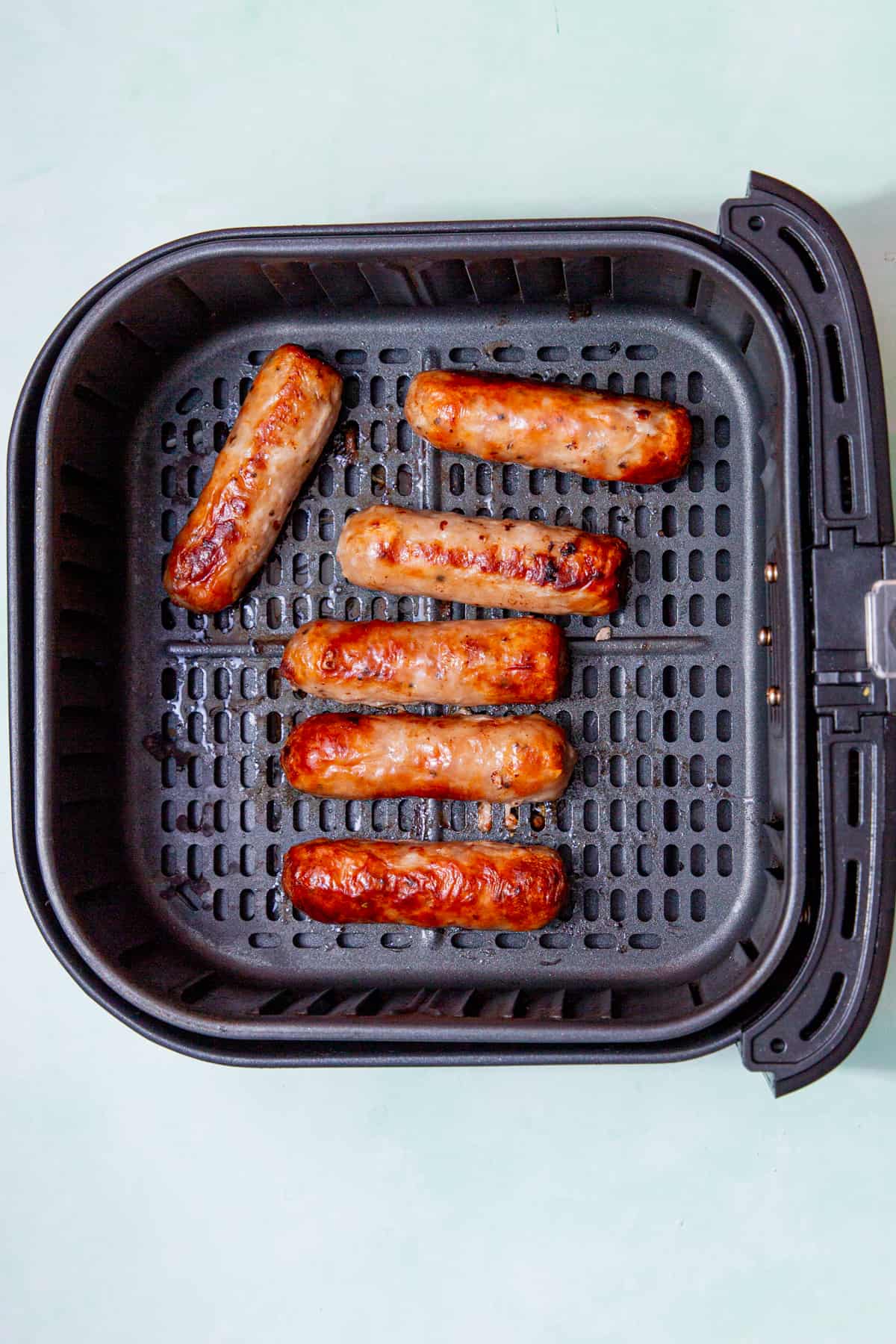
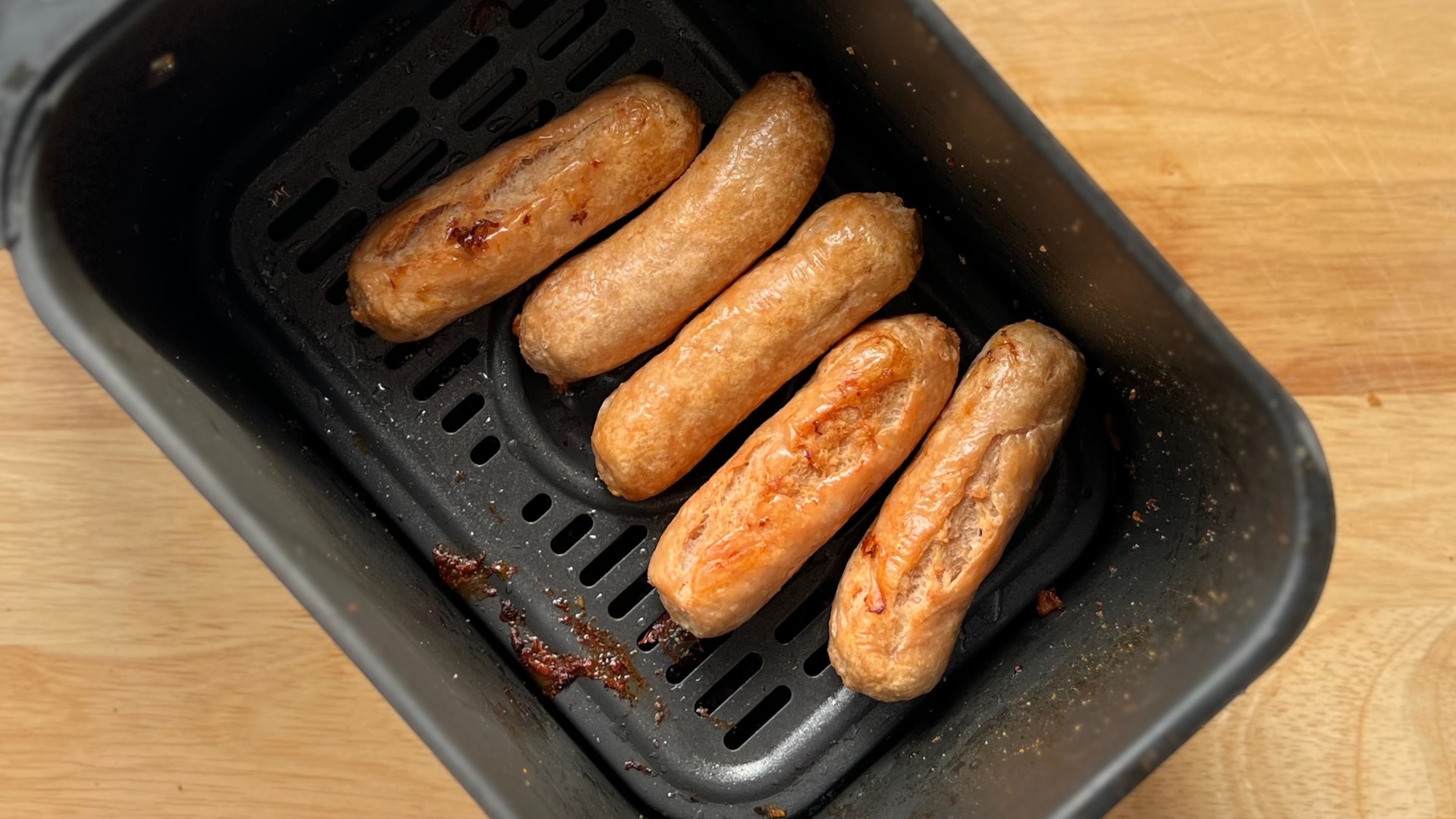
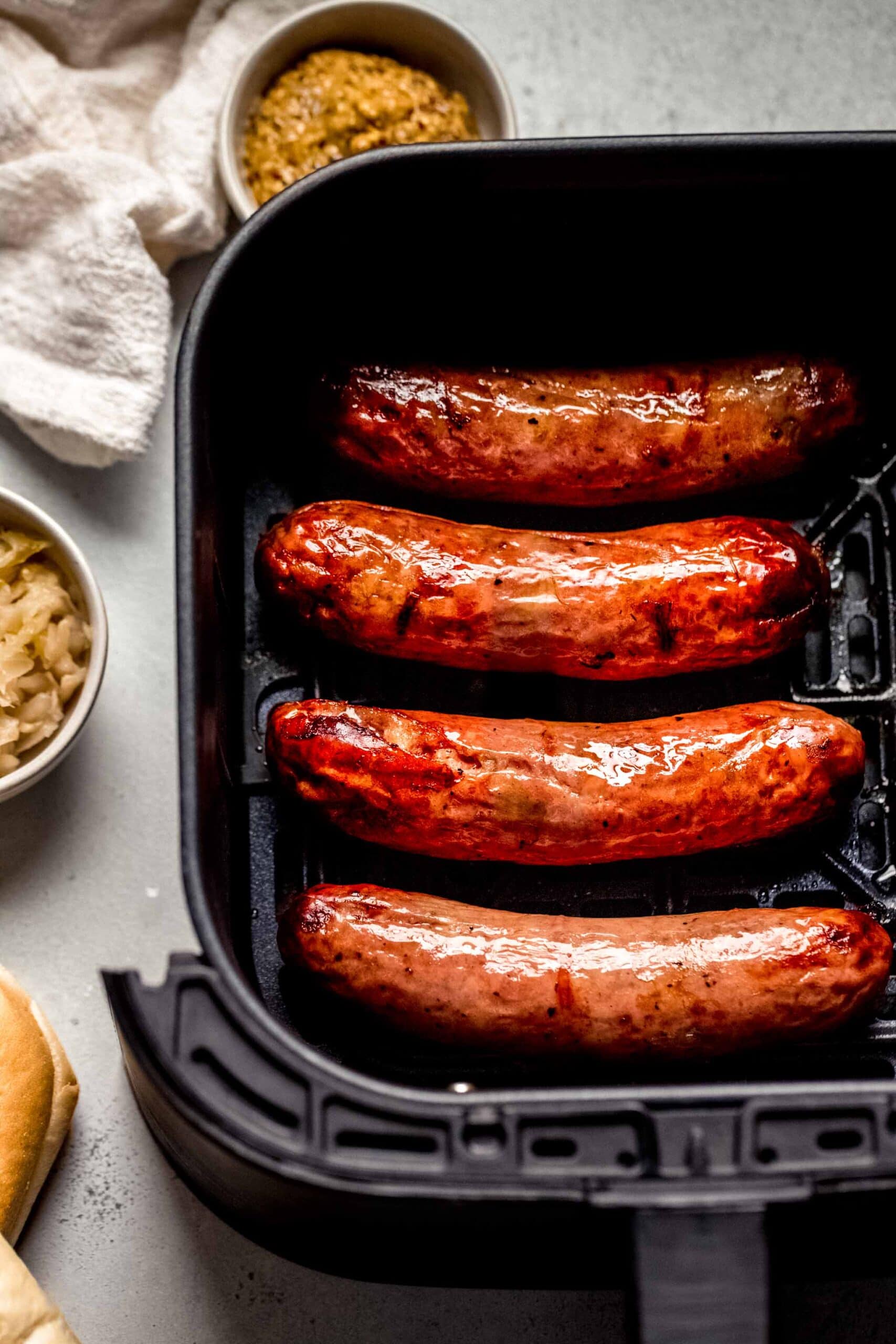
- Casings browned and slightly taut; juices run clear (color alone isn’t reliable).
- Texture is firm, not mushy.
What to do if it fails mid‑cook
- If the center is too cold: continue cooking at 350–360°F and retest every 2–3 minutes.
- If the outside is burning before the inside reaches temp: lower the temp 10–20°F and extend time.
- If casings split repeatedly: lower temp and cook slightly longer; consider using pre‑cooked options or smaller batches.
Safety notes
- Never assume visual doneness equals safe temp. Always use a thermometer.
- Don’t leave the air fryer unattended for long stretches while testing fixes.
- If using a probe left inside during cooking, verify the air fryer manual allows it; many do not.
Relevant variables, examples, and a simple decision table
Answer first: choose temp/time by sausage type, size, and whether raw or pre‑cooked. Then confirm with temp.
Key variables
- Sausage type: raw pork/beef, poultry, or pre‑cooked.
- Size/weight: small, regular, or large.
- Air fryer model: wattage and basket shape affect airflow.
- Crowding: more sausages → longer cook and uneven browning.
- Starting state: fully frozen vs partially thawed.
Practical examples (US kitchen, 350–380°F)
- Example A — Frozen smoked kielbasa, sliced: 350°F, 8–10 minutes, shake at 4 minutes, target 140°F.
- Example B — Frozen pork bratwurst, 3.5 oz each: 360°F, 14–18 minutes, flip at 8–9 minutes, target 160°F.
- Example C — Frozen chicken sausage, 4 oz each: 375°F, 18–22 minutes, flip at 10 minutes, target 165°F.
Decision table (quick pick)
- Pre‑cooked, thin or sliced → 350°F, 8–12 min → 140°F target.
- Small breakfast links → 350°F, 10–14 min → 160°F (if pork) or 165°F (if poultry).
- Regular raw sausages → 360–375°F, 12–18 min → 160°F.
- Large raw sausages → 360°F, 18–22 min → 160°F.
How to scale times for crowding or frozen block
- If you double the number and they overlap, add 20–30% more time and check temps sooner rather than later.
- Avoid overlapping; better to run two batches than one crowded batch.
Example time calculation (hypothetical)
- One raw 3.5‑oz brat: 16 minutes at 360°F. Two stacked frozen brats: estimate +20% → 19–20 minutes; check temp at 16 and again at 19.
Common mistakes, exceptions, limitations, and safety boundaries
Answer first: common errors are relying on color alone, overcrowding, and skipping the thermometer. Fixes are simple and safety‑critical.
Top mistakes and fixes
- Mistake: Trusting color instead of temperature. Fix: Use an instant‑read thermometer.
- Mistake: Overcrowding the basket. Fix: Cook in single layer; batch if needed.
- Mistake: Using the highest temp for faster results. Fix: Use moderate temps (350–375°F) and extend time; reserve 1–2 minute high bursts for finishing.
- Mistake: Pricking sausages routinely to prevent splitting. Fix: Don’t routinely prick — that releases juices and dries the sausage. Only prick if casing has already split badly.
- Mistake: Leaving a probe thermometer in place when the air fryer/manual disallows it. Fix: Check your air fryer manual; use an instant‑read thermometer after cooking if required.
Exceptions and special cases
- Vacuum‑packed frozen sausages: some need to be removed from packaging before cooking. Never put sealed plastic into an air fryer.
- Frozen block of linked sausages: separate them under warm running water briefly or give a longer initial cook period, then separate once pliable.
- Homemade or artisanal sausages with fragile casings may split more easily — reduce temp and lengthen time.
Limitations
- Air fryer models differ. Treat the timings as starting points.
- Some pre‑cooked sausages brown less; a light oil spray can improve browning but is optional.
- You cannot rely on microwave thawing solely for food safety. If you thaw in microwave, finish cooking immediately and check temps.
Safety boundaries (U.S. guidance)
- Minimum internal temps: 160°F for raw pork/beef/veal/lamb sausages; 165°F for poultry sausages. Reheat pre‑cooked to 140°F.
- If you consistently can’t reach safe temp without burning the outside, lower temp and increase time. If still inconsistent, cook in oven where airflow is gentler.
Distinct follow‑up questions readers ask next and a concise next action
Answer first: most readers next ask about reheating leftovers, storage, and preventing splitting. The next action is to test with a thermometer and note your air fryer’s behavior.
Observed and inferred reader questions (compact gap map)
- OBSERVED QUESTION: “Can I prick sausages to prevent bursting?” — Found in many forums. Coverage by competitors is mixed. Answer: Avoid routine pricking; it drains juices and dries the sausage. Only pierce to release steam if casing is already split. (Placement: Common mistakes)
- OBSERVED QUESTION: “How to reheat cooked sausages in the air fryer?” — Competitors give times but often skip internal temp. Answer: Reheat at 350°F for 4–6 minutes until 140°F. (Placement: FAQs)
- INFERRED NEXT NEED: “What leftover storage and reheating method keeps texture?” — Competitors often miss cooling and sealed storage guidance. Answer: Cool to room temp ≤2 hours, refrigerate in airtight container ≤4 days, reheat to 165°F for safety and texture. (Placement: Follow‑up/FAQs)
- OBSERVED QUESTION: “Can I use foil or a tray in my air fryer?” — Coverage inconsistent. Answer: Use foil only per manual; don’t block airflow. (Placement: Common mistakes)
- INFERRED NEXT NEED: “How to adapt times for different air fryer brands?” — Competitors rarely provide practical adjustment rules. Answer: Track one sausage’s temp as a baseline and adjust future cooks by ±10–20% time depending on browning and temp lag. (Placement: Variables/examples)
Priority: thermometer use and safe internal temps are highest. Next come texture preservation and appliance-specific adjustments.
Next action for the reader
- Run one test batch today: pick one frozen sausage, set your air fryer to 360°F, cook for the midpoint of the recommended time, and measure internal temp. Note the time when it reached target. Use that baseline for future batches.
FAQs
Q: Do I need to thaw frozen sausages before air‑frying?
A: No. You can cook from frozen safely in an air fryer. Thawing shortens cook time but is not required. If you do thaw in the fridge, cook within 1–2 days.
Q: Can I cook different types of sausages together (poultry + pork)?
A: You can, but cook until the highest required internal temp is reached (165°F if any poultry). Expect different browning; consider separate batches for best texture.
Q: Can I use foil or an air fryer liner with frozen sausages?
A: Only if your air fryer manual permits foil/liners. Never cover the basket completely—do not block airflow. Place foil under sausages but not wrap them.
Q: Why did my sausages burst in the air fryer?
A: High heat plus trapped steam increases casing pressure. Solutions: cook a bit cooler and longer, avoid pricking, and don’t crowd the basket. Some casings split naturally; it’s not unsafe if internal temp was reached.
Q: How should I store and reheat leftover cooked sausages?
A: Refrigerate within 2 hours in an airtight container for up to 4 days. Reheat in an air fryer at 350°F until internal temp reaches 165°F for best safety and texture.
Key takeaways (short)
- Use an instant‑read thermometer — it’s the single most important tool.
- Cook frozen sausages in a single layer at ~350–375°F.
- Target internal temps: 160°F for raw pork/beef, 165°F for poultry, 140°F for reheated pre‑cooked.
- Flip halfway and adjust time by sausage size and air fryer model.
Final concise next action
Run one test sausage in your air fryer at 360°F, check the internal temp at the midpoint of the published range, and record the exact time when it reaches the safe target. Use that as your appliance‑specific baseline.
Conclusion
Cooking sausages from frozen in an air fryer is a reliable, safe, and quick method when you follow temperature targets, avoid overcrowding, and use an instant‑read thermometer. Start with the conservative times here, adjust for your model, and always confirm doneness by temperature rather than color.