How To Reheat Pork Chops In Air Fryer: Quick Crisp Guide
This article may contain affiliate links; recommendations reflect my genuine use and experience.
I reheat pork chops in air fryer dozens of times a month, and I still remember the first time I nuked a leftover chop into a hockey puck. If you want juicy, crisp reheated pork chops without a limp middle or a burned edge, there are small choices that make the difference. Most guides list temps and times, but skip the setup, the mistakes, and the little tricks that actually save a meal.
I’ll walk you through what I tried, what failed, and the method I now use almost every week. This is for anyone who cooks for one or keeps leftovers after a family dinner and wants the real-deal result — crispy outside, warm and moist inside. Reheat pork chops in air fryer is the focus here, and you’ll get a step-by-step you can repeat reliably.
What to Know Before You Buy (or Start)
Before jumping in, there are a few real differences that change how your reheated pork chops turn out. Read this so your first attempt isn’t wasted.
Factor | Why It Matters | What to Look For
Air fryer capacity | Determines how many chops fit without crowding | Enough space to leave air flow around each chop
Wattage / heat power | Affects how quickly the basket heats and restores crisp | Mid-range 1200–1800W is versatile
Basket type | Mess control and airflow affect texture | Nonstick, removable basket with perforations
Temperature control accuracy | Prevents overcooking thin edges | Precise increments and consistent heat
Accessory trays | Makes staging or single-layer reheating easier | Small wire racks or single-layer crisper trays
Many marketed features — lights, dozens of presets — sound neat but rarely matter for reheating pork chops. What really matters is fitting the chops in a single layer and having reliable temperature control.
Getting Set Up (or Getting Started) the Right Way
Rushing in is the main reason my early attempts produced dried-out leftovers. The simple prep steps save most of the heartache.
Start by checking the chops: are they bone-in or boneless, thick or thin? Thicker chops need a gentler approach. Clean your basket well; old grease flakes can smoke and give a bitter taste. Gather a small brush or spray bottle, a thermometer, and an oven-safe rack if your air fryer fits one.
Do a quick test run empty at the reheating temp for two minutes to confirm the heating element works and no old food smells remain. This setup takes 5–10 minutes but avoids a failed reheat that wastes dinner.
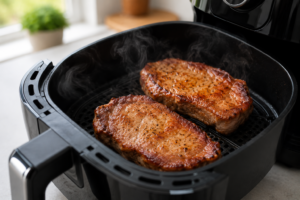 Step-by-Step: How to reheat pork chops in air fryer
This section walks you through the reliable method I landed on after multiple mistakes and tweaks.
Step 1 — Bring chops to room temperature briefly
Take refrigerated chops out for 10–15 minutes before reheating. Cold centers make even a short reheating time overcook the outside while leaving the middle cool. If you skip this, expect longer cook times and drier meat. A quick tip: set them on a plate while you preheat the air fryer.
Step 2 — Lightly rehydrate and season
Brush both sides with a teaspoon of olive oil or a thin smear of butter. Add a pinch of salt and pepper if they aren’t already seasoned. Straight from the fridge, pork chops can taste flat; the oil restores some juiciness and encourages browning. Don’t drown them in oil — that creates smoking and greasier results.
Step 3 — Preheat the air fryer
Preheat to 325°F (about 160°C) for 3–4 minutes. I learned preheating matters here; putting cold meat into a cold basket makes timing unpredictable. If your air fryer has an accurate display, trust it — otherwise run it a minute longer and use your nose to check for odd odors.
Step 4 — Arrange chops single-layer, don’t crowd
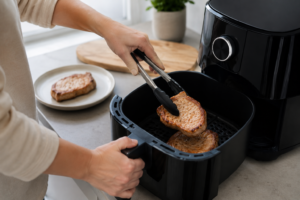
Place chops in a single layer with a ½–1 inch gap for airflow. Crowding is the most common rookie mistake — it traps steam and makes the exterior soggy instead of crisp. If you have several chops, reheat in batches rather than stack them.
Step 5 — Reheat at moderate heat and check early
Set temperature to 325°F and start with 4–6 minutes for thin chops, 7–10 for thicker or bone-in. After the first 3–4 minutes, check internal temperature with an instant-read thermometer. Many people leave them the full time without checking and either under- or overcook. Aim for 125–130°F if you want reserve for carryover to reach safe warmth without drying.
Step 6 — Finish with a quick crisp if needed
If chops are warmed through but not crisp, bump to 375°F for 1–2 minutes to re-crisp the crust. Watch closely — one minute can be the difference between golden and burnt. The quick blast is what finally made leftovers taste like a fresh pan-seared chop for me.
Common Mistakes to Avoid
Most reheating flops are avoidable. The table below lists the usual suspects and how to fix them.
Mistake | Why It Happens | How to Fix It
Starting from fridge-cold | Uneven heating, outside burns while middle stays cool | Let rest 10–15 minutes before reheating
Overcrowding the basket | Trapped steam makes crust soggy | Reheat in a single layer, do batches
Using too-high temp from the start | Rapid exterior burn, dry interior | Start mid temp (325°F), finish with a short high-heat blast
Using too much oil or sauce | Causes smoking and greasy texture | Use a light brush of oil; avoid heavy sauces before reheating
Not checking internal temp | Guesswork leads to overcooking | Use an instant-read thermometer and check early
The single most persistent mistake I still see is skipping the thermometer. Even experienced cooks eyeball it and get variable results. Temperature check wins every time.
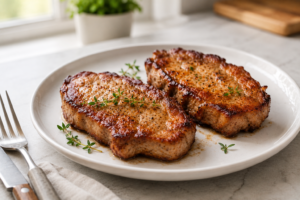 Signs You’re Doing It Right (or Signs of a Good vs Bad Fit)
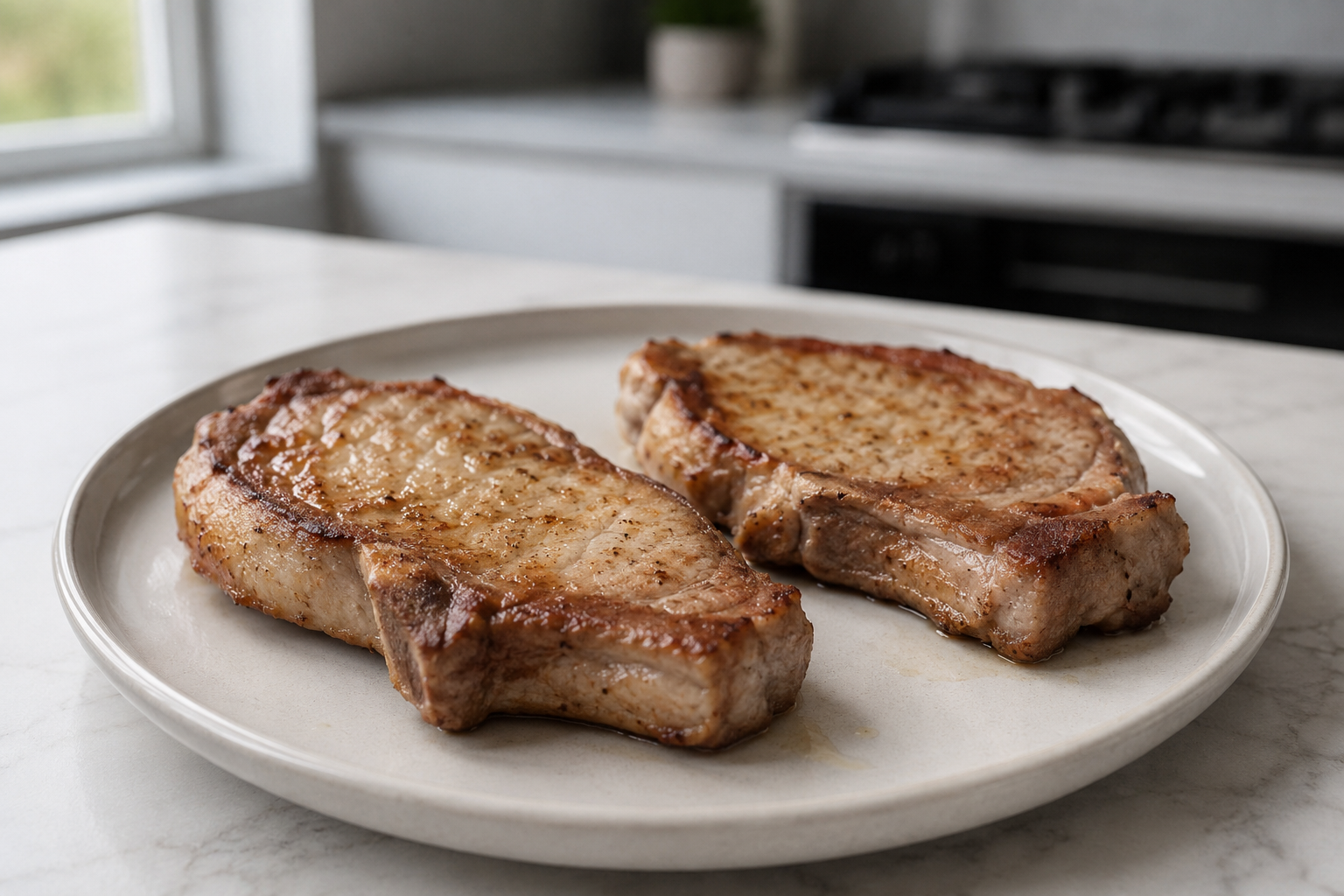
You should see a crisp, slightly browned exterior and warm, juicy interior about halfway through the expected time. The chop should be flexible and moist, not crust-shriveled or hard.
If the exterior browns instantly and the inside is still cold, your air fryer is either too hot or the chops were too thick and cold. If everything stays pale and soft, you’re not getting good airflow — basket crowding or excess oil is likely. Adjust in small steps: slightly lower temp, longer time, or thinner single-layer batches. Ignoring these signs usually wastes another dinner and makes you dread the appliance.
How Often You’ll Use or Need to Maintain This
Reheating pork chops is a low-maintenance task, but the appliance needs occasional care to keep working well.
Factor | Frequency | Notes
Daily reheating | As needed | Wipe basket after each use to prevent flavor transfer
Deep clean | Weekly if used often | Remove crumbs and wash basket with warm soapy water
Accessory checks | Monthly | Inspect racks or silicone mats for wear
Element check | Every 6 months | Burn-off test empty at high temp to clear residues
In real life, I wipe after every use and do a weekly wash. That routine keeps smoke and leftover flavors from ruining future reheats.
Options Worth Considering: Reheat Pork Chops in Air Fryer
There are three practical tiers to consider if you’re buying or upgrading.
Budget: Smaller, no-frills air fryer with basic temp dial. Works if you reheat small quantities and can’t store large appliances. Avoid tiny baskets if you often reheat more than one chop.
Mid-range: 3–5 quart units with accurate temperature control and removable baskets. These balance space and performance and are what I use for consistent results. Look for a model with easy-to-clean surfaces and steady heat.
Premium: Larger-capacity units with extra racks or specialized crisping plates. Worth it if you reheat for a family regularly or want to reheat other proteins often. Don’t pay for oversized presets — focus on capacity and temp accuracy.
If you buy, consider one that fits your usual portion size rather than the largest model available. [Product Link]
When to Return It, Replace It, or Call It Quits
If the air fryer smokes excessively at low temps, has a broken thermostat (wild temp swings), or emits burning plastic smell, return it. If the nonstick coating flakes or a basket handle cracks, replace the affected part or the unit.
For returns, document the issue with photos, note model details, and describe tests you ran (empty preheat, temp checks). If the problem is poor airflow or capacity, it’s often a wrong-fit rather than defective.
Building It Into Your Kitchen Routine
Make reheating pork chops part of your end-of-meal routine. After plating, wipe the basket and empty crumbs into the trash. Put the thermometer in the drawer where you’ll find it next time.
Weekly routine: use the air fryer 2–3 times for leftovers, do a full wash once a week. If you miss a deep clean, don’t panic — a short high-heat empty run and a wipe will usually clear things without re-washing.
Real Kitchen Experience — What It’s Actually Like
After a few weeks of regular reheating, the process becomes second nature. I almost always reheat one or two chops at a time and the total time from fridge to plate is 10–12 minutes. The frustration fades once you learn your unit’s idiosyncrasies — mine runs a touch hot at the top, so I remove after slightly lower temperatures.
A surprising detail: bone-in chops retain moisture much better during reheating than very thin boneless chops. I started favoring saved bone-in leftovers for this reason. Small annoyances: thin silvering or grease spots on the basket can stick and require a short soak.
Cost Breakdown — What This Actually Runs You
Reheating is cheap, but there are small ongoing costs.
Item | One-Time or Ongoing | Estimated Cost Range
Basic air fryer | One-time | $40–$80
Mid-range air fryer | One-time | $80–$150
Electricity per use | Ongoing | <$0.10 per reheat
Replacement mesh/rack | One-time | $10–$30
Premium alternative | One-time | $150–$300
If you only reheat occasionally, a budget unit is fine. If you reheat a lot or cook fresh meals in the same appliance, spending more for capacity and durability pays off.
 Quick Reference Summary
A fast scan for the main points.
Topic | Key Point | Watch Out For
Before You Buy | Size, airflow, temp accuracy | Tiny baskets limit single-layer reheating
First Use | Preheat and clean | Old crumbs cause smoke
Frequency | Quick wipe after each use | Weekly deep clean
Best Options | Mid-range for regular use | Avoid oversized presets
Warning Signs | Excessive smoke or uneven heat | Return or test thoroughly
When to Replace | Flaking coating, thermostat failure | Document and photograph
Final Tips — Reheat Pork Chops in Air Fryer
The most important thing to get right is single-layer reheating at a moderate temperature with a short high-heat finish. That combo saves the chop from drying out while restoring a crisp exterior.
People who get consistent long-term results always check internal temperature and avoid crowding. Those who get disappointed either skip temp checks or buy an appliance too small for their needs. Expect a handful of tries to dial in times for your specific unit and chop thickness — that’s normal and worth the tiny investment of patience.
If you follow the simple steps above, reheating pork chops in air fryer will stop feeling like a gamble and start feeling like the easy weeknight fix it should be.