How To Make Jerky In Air Fryer: Easy Crispy Recipe
I’ve made jerky in my air fryer dozens of times, and this guide shows you how to make jerky in air fryer with clear steps, safety tips, and flavor ideas. I blend kitchen science, food-safety practices, and hands-on testing to help you get consistent results. Read on for equipment, marinades, step-by-step instructions, troubleshooting, and storage so your homemade jerky turns out great every time.
Why make jerky in an air fryer?
Making jerky in an air fryer is fast, energy-efficient, and great for small batches. The air fryer moves hot air well. This means smoke-free drying and even results without a dehydrator or oven.
Benefits of using an air fryer
- Shorter preheat and cook times compared to many ovens.
- Compact size for small batches and apartment cooking.
- Crisp edges and chewy centers when done right.
Limitations to know
- Rack space limits batch size. You may need multiple rounds.
- Airflow can vary by model. Test times for your unit.
 ingredients”
style=”max-width: 100%; height: auto; border: 2px solid black; border-radius: 10px; display: block; margin: 0 auto;”
loading=”lazy”
/>Source: the-denture-place.com
What you need: equipment and ingredients
Basic equipment
- Air fryer with adjustable temp control and a rack or mesh trays.
- Sharp chef’s knife or meat slicer for thin, even slices.
- Resealable bags or shallow dish for marinating.
- Food thermometer to check final temps.
Core ingredients
- Lean beef, turkey, or venison. Choose cuts like eye of round, top round, or flank.
- Soy sauce or tamari, liquid smoke, salt, and sweetener (brown sugar, honey).
- Spices: black pepper, garlic powder, onion powder, and red pepper flakes for heat.
Optional tools
- Freezer to firm meat for easier slicing.
- Paper towels to pat dry slices before cooking.
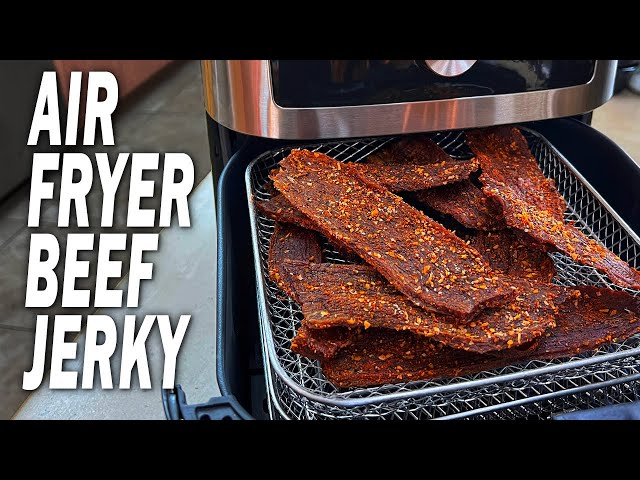
Source: youtube.com
Choosing meat and prepping slices
Pick lean cuts to avoid fat going rancid or making jerky greasy. Trim all visible fat. Fat shortens shelf life and makes texture uneven.
How to slice for best jerky
- Freeze meat for 30–60 minutes so it firms up.
- Slice with the grain for chewier jerky. Slice against the grain for tender jerky.
- Aim for 1/8 to 1/4 inch thickness. Thinner slices dry faster.
Portion tips
- Plan for about 1 pound fresh meat to yield 6–8 ounces of jerky.
- Label and date before storing.

Source: youtube.com
Marinades and seasoning ideas
A good marinade adds flavor and helps preserve. Keep salt balanced to avoid over-salty jerky.
Basic savory marinade (simple)
- 1/2 cup soy sauce
- 1 tablespoon Worcestershire sauce
- 1 tablespoon brown sugar
- 1 teaspoon garlic powder
- 1/2 teaspoon black pepper
Sweet-spicy marinade
- 1/3 cup soy sauce
- 2 tablespoons honey or maple syrup
- 1 tablespoon sriracha or hot sauce
- 1 teaspoon smoked paprika
Low-sodium or gluten-free swaps
- Use tamari for gluten-free.
- Reduce soy and add more acid (vinegar or citrus) for flavor without salt.
Marinating time
- Marinate 4 to 12 hours refrigerated. Overnight gives deeper flavor.
- Flip slices halfway through marinating for even coverage.
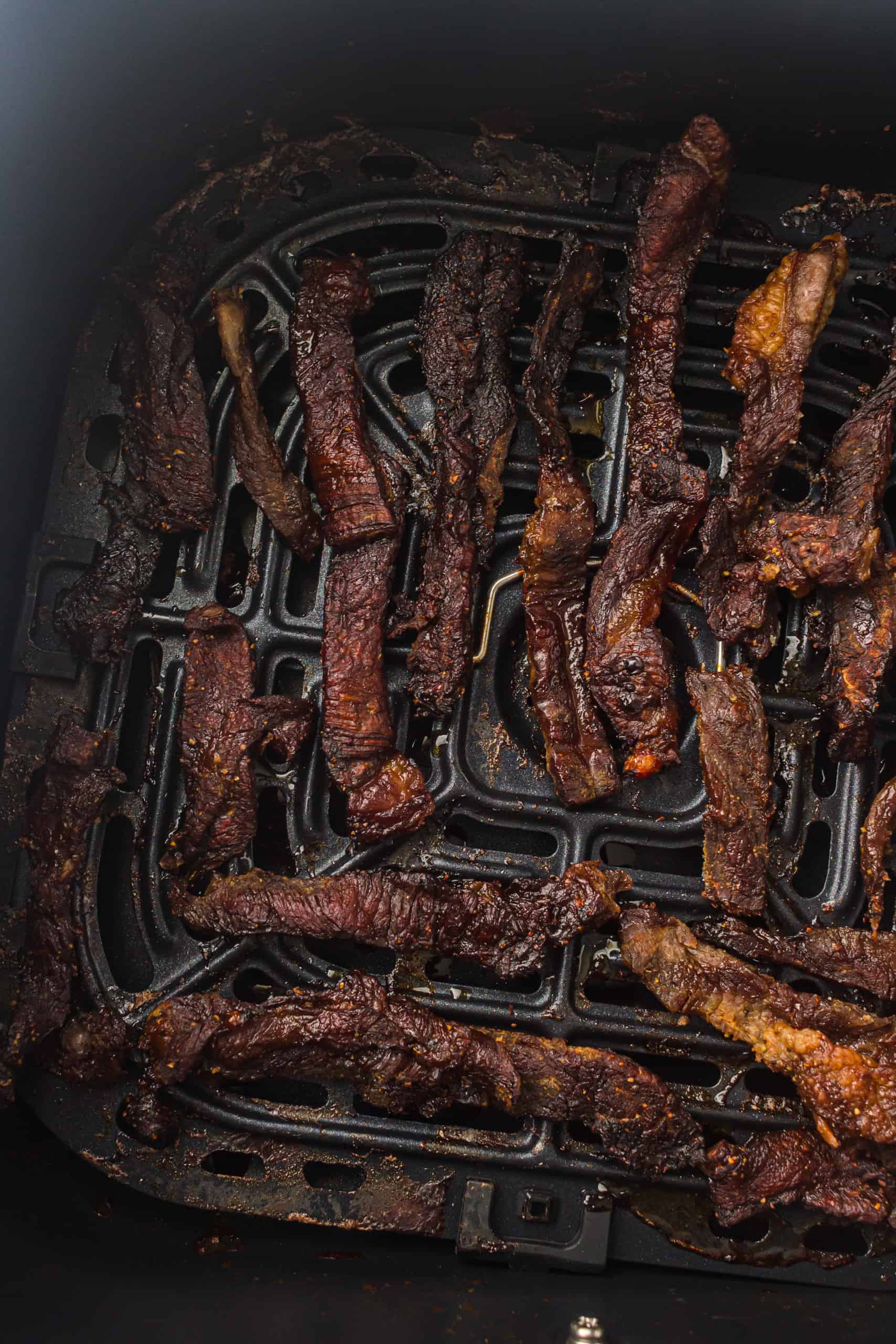
Source: luasmusic.com
Step-by-step: How to make jerky in air fryer
Follow this clear method to make jerky in air fryer at home.
- Prep meat
- Trim fat and slice to 1/8–1/4 inch. Pat dry.
- Marinate
- Combine ingredients and add meat. Refrigerate 4–12 hours.
- Drain and dry
- Remove meat from marinade and pat with paper towels. Remove excess liquid.
- Arrange in air fryer
- Place slices on the rack or mesh tray in a single layer. Do not overlap.
- Cook
- Set air fryer to 160°F to 180°F if your model allows low temps. If not, use 170°F–185°F.
- Cook 1.5 to 3 hours, flipping once halfway through.
- Check doneness
- Jerky should bend and crack but not snap. Use a food thermometer; internal temp should reach 160°F for beef.
- Cool and store
- Let cool on a rack for 30 minutes. Store in airtight containers or vacuum-seal.
Note on temperature: Some air fryers do not reach very low temps. If yours only starts at higher temps, reduce time and check often to avoid burning. Repeat small test batches to dial in timing.

Cooking times, temperatures, and how to tell when it’s done
Time and temp vary by slice thickness. Start testing early to avoid overcooking.
General guidelines
- Thin 1/8 inch slices: 90–120 minutes.
- Thicker 1/4 inch slices: 2–3 hours.
- Temperature: 160°F to 180°F recommended for dehydration.
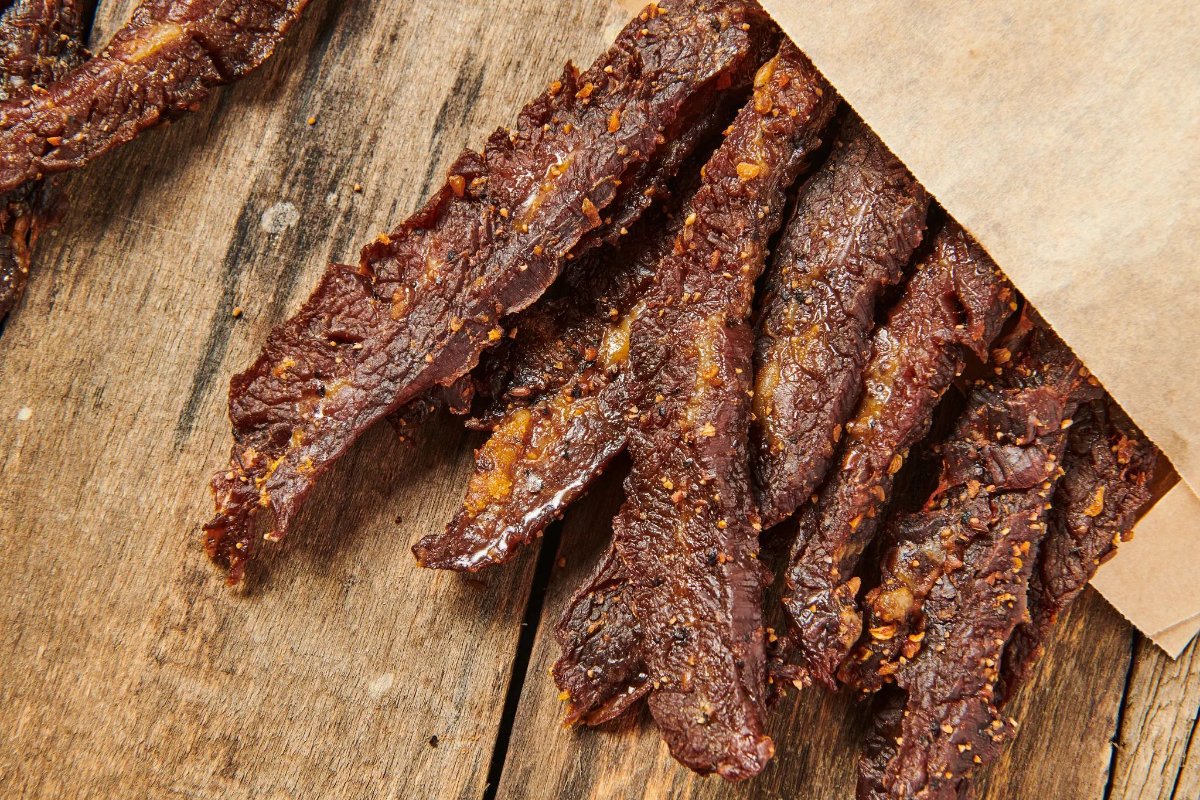
Signs jerky is done
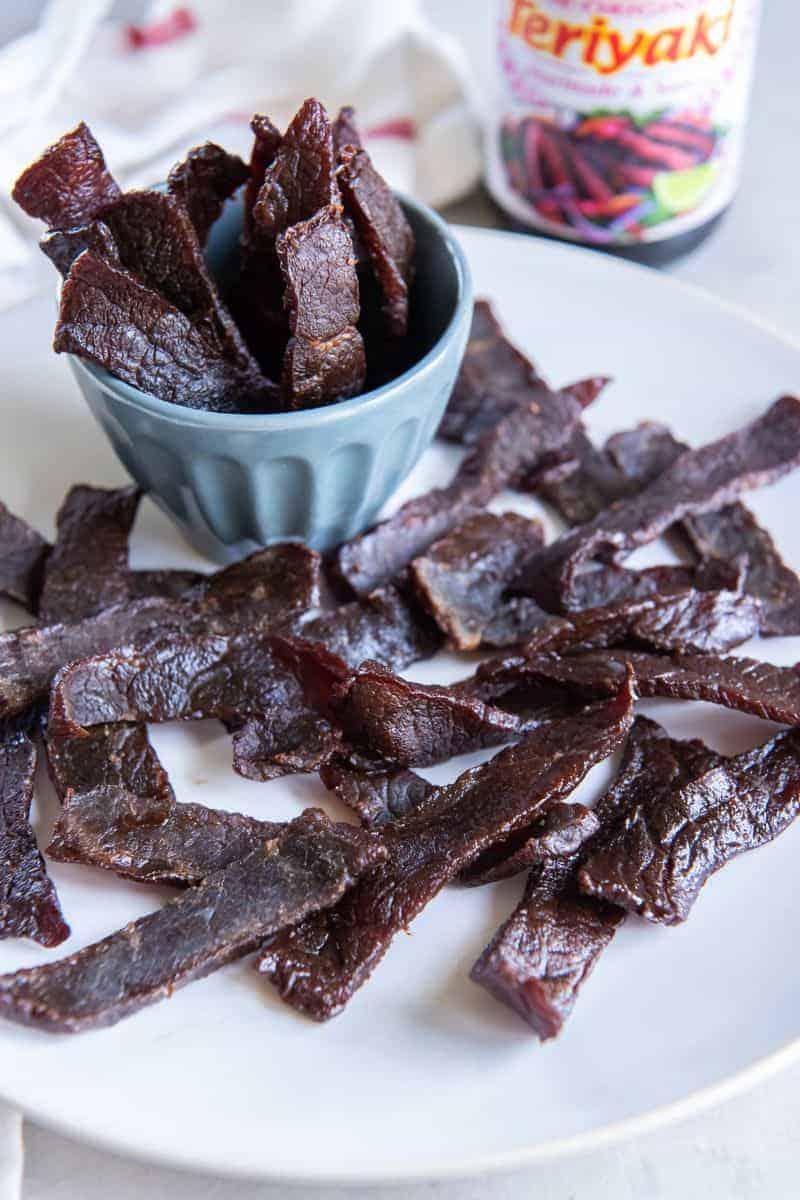
- Bends and cracks but does not break in half.
- Surface is dry and tacky, not wet.
- Internal temp reached recommended safe level for that meat.
How long does jerky take in an air fryer?
Expect 1.5 to 3 hours depending on thickness and air fryer model. Check at the 90-minute mark for thin slices.
Can you set the air fryer to 160°F?
Only if your air fryer has that setting. Many models start at higher temps, so monitor closely to prevent burning.
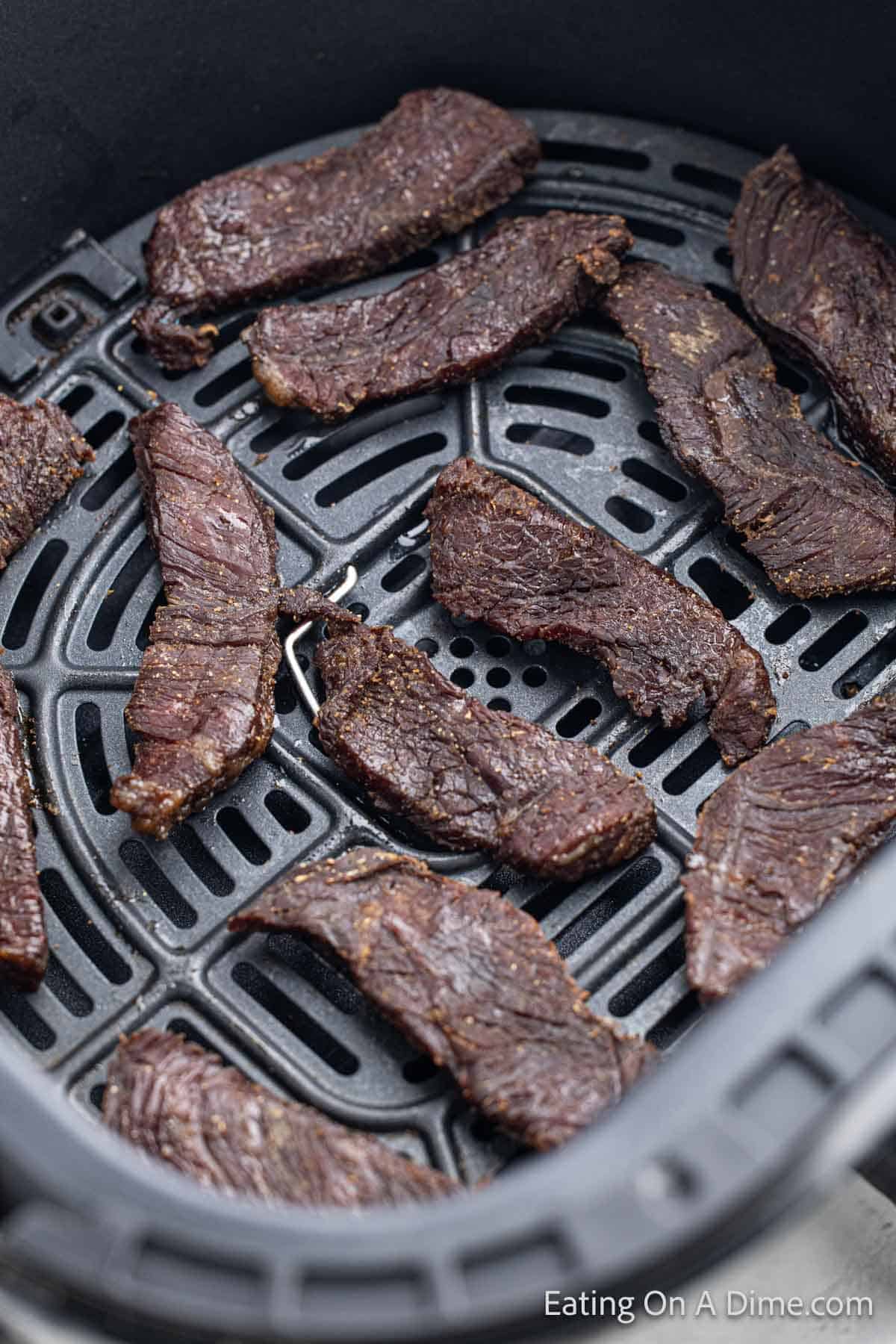
Food safety and storage
Safe handling keeps jerky tasty and safe to eat. Drying alone does not sterilize meat, so follow these tips.
Safety rules
- Keep raw meat refrigerated until ready to marinate.
- Use a food thermometer. For beef, heat to 160°F internal prior to long storage.
- Avoid cross-contamination. Clean surfaces and tools.
Storage times
- Room temperature: store sealed and eaten within 1–2 days.
- Refrigerator: 1–2 weeks in airtight container.
- Freezer: up to 6 months vacuum sealed.
Shelf-life tips
- Use lean meat and remove fat to extend shelf life.
- Vacuum-seal for best results.

Source: jepa-riemst.be
Variations and flavor ideas
Try different proteins and spices to keep things fresh.
Protein swaps
- Turkey jerky: lean and mild. Adjust cook time slightly shorter.
- Venison jerky: strong flavor. Use more sweet notes to balance.
- Tofu or mushroom jerky: plant-based options for similar texture.
Flavor twists
- Teriyaki: add ginger and pineapple juice.
- Sweet chili: use brown sugar and chili flakes.
- Coffee-rub: espresso and black pepper for deep roast notes.
Troubleshooting common problems
Here are quick fixes for typical issues.
Jerky too tough
- Slice against the grain next time. Thinner slices help.
- Reduce cook time and avoid over-drying.
Jerky soggy or chewy
- Pat slices dry before cooking. Increase temperature slightly or extend time.
Burnt edges
- Lower temperature or flip more often. Use smaller batches and check earlier.
Personal experience: lessons I learned making jerky in an air fryer
I learned by trial and error with three different air fryers. My top lessons are simple and practical.
What worked
- Freezing for 30 minutes made slicing easy and consistent.
- Patting slices dry cut cooking time and improved texture.
- Small, consistent batches gave even airflow and reliable results.
Mistakes to avoid
- Overcrowding the basket causes uneven drying.
- Using fatty cuts made jerky greasy and shortened shelf life.
- Relying only on time—texture check is more reliable.
Tip from my kitchen
- Keep a dedicated set of tongs and trays. It keeps raw meat separate and cleaning easy.
Frequently Asked Questions of how to make jerky in air fryer
What is the best meat for jerky in an air fryer?
Lean cuts like eye of round, top round, or flank are best. They dry well and keep longer than fattier cuts.
How thin should I slice the meat for air fryer jerky?
Aim for 1/8 to 1/4 inch thickness. Thinner slices dry faster and more evenly.
Do I need to marinate meat before air fryer jerky?
Marinating adds flavor and helps preserve. Marinate 4 to 12 hours for best results.
Can I use an air fryer that lacks a low-temp setting?
Yes, but watch closely. Use slightly higher temps and check often to prevent burning.
How long does homemade jerky last when stored properly?
In the fridge, 1–2 weeks. In the freezer, up to 6 months if vacuum-sealed.
Is air fryer jerky safe to eat without cooking to a certain temperature?
Use a food thermometer. For beef, reach 160°F to ensure safety if you plan long storage.
Can I make vegan jerky in an air fryer?
Yes. Use tofu, seitan, or mushroom slices. Adjust marinating and time for texture.
Conclusion
Making jerky in an air fryer is a simple, rewarding way to craft tasty snacks at home. You can control flavors, use lean cuts, and make small fresh batches fast. Start with the step-by-step plan here, test a small batch, and tune time and seasoning to your taste. Try one new flavor this week and share your results or questions below — I’d love to hear how your jerky turns out.