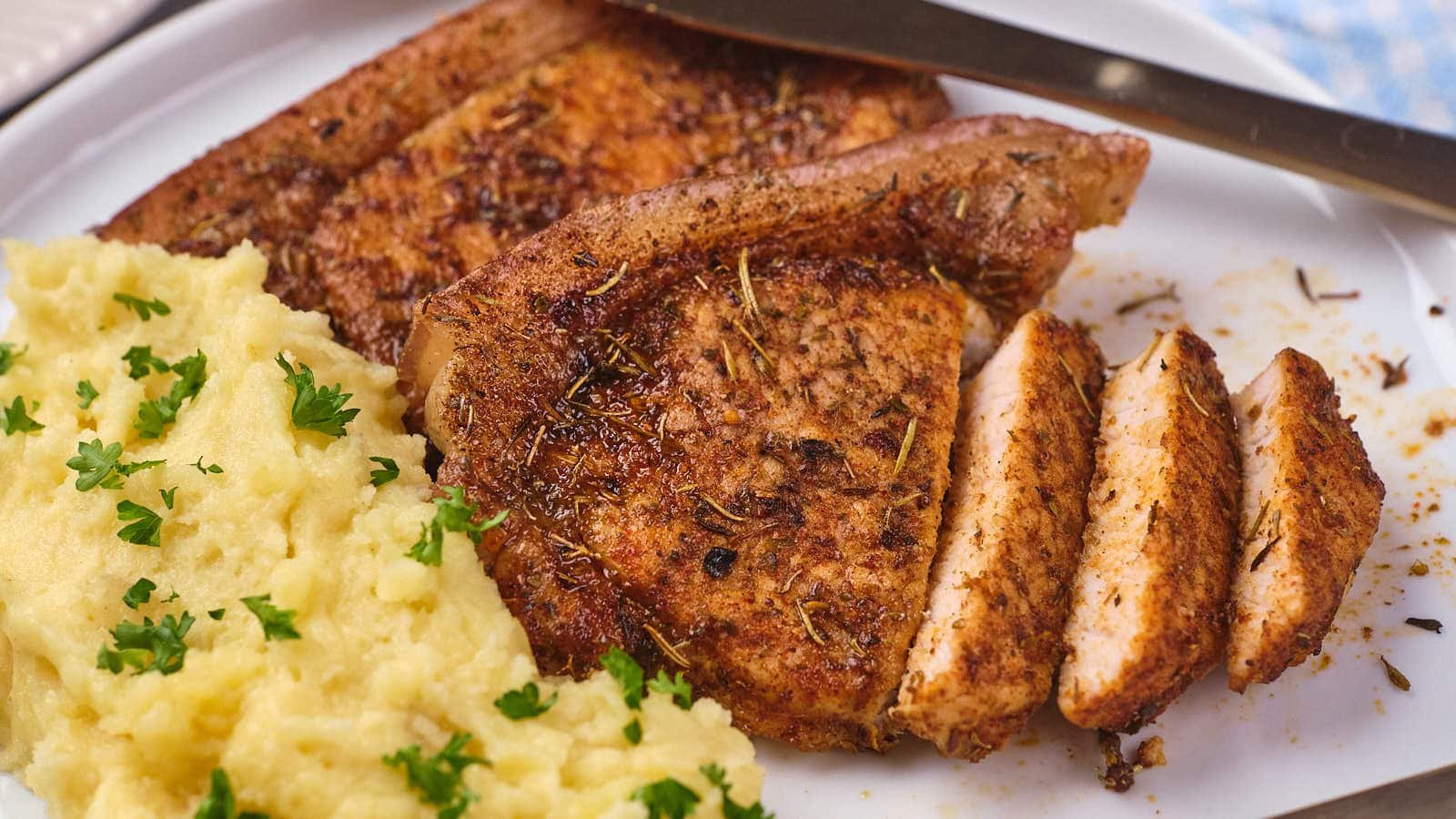
How To Cook Thick Pork Chops In Air Fryer: Crispy & Juicy
Quick answer: In the United States, cook 1–1.5 inch thick pork chops in a preheated air fryer at 375°F–400°F until the internal temperature reaches 145°F, usually 12–18 minutes total with one flip and a 3-minute rest. Use a reliable instant-read thermometer and follow USDA food-safety guidance to ensure safe, juicy results.

Essential context and safety (what you must know first)
Answer: Use the USDA target temperature, a thermometer, and simple prep to keep thick pork chops safe and juicy.
- The USDA recommends cooking whole cuts of pork to 145°F and then letting them rest for at least 3 minutes before slicing. This rule applies throughout the U.S.
- “Thick” pork chops generally mean 1 to 2 inches. Thicker chops need more time but finish the same internal temp.
- Air fryers cook by circulating hot air. This gives a brown exterior without shallow frying. Hot air and short cook times can dry pork if you skip prep steps like brining or oiling.
- Always avoid cross-contamination. Use separate cutting boards for raw pork and ready-to-eat foods. Wash hands and surfaces with hot, soapy water.
Source: nordicrecipebox.com
How to cook thick pork chops in an air fryer — step-by-step method
Answer: Brine or season, preheat, cook at 375°F–400°F, check the temp, and rest.
Prerequisites (what to have ready)
- Thick pork chops (bone-in or boneless), trimmed of excess fat.
- Instant-read thermometer.
- Air fryer that fits the chops without crowding.
- Optional: kosher salt, sugar (for brine), oil, spices.
Recommended simple brine (optional but very effective)
- Mix 1 quart (4 cups) cold water, 1/4 cup kosher salt, 1/4 cup sugar. Submerge chops 30 minutes to 2 hours in the fridge. Rinse and pat dry before seasoning.
- If you skip brine, pat chops dry and rub lightly with oil and seasonings.
Step-by-step cook (1–1.5 inch thick chop example)
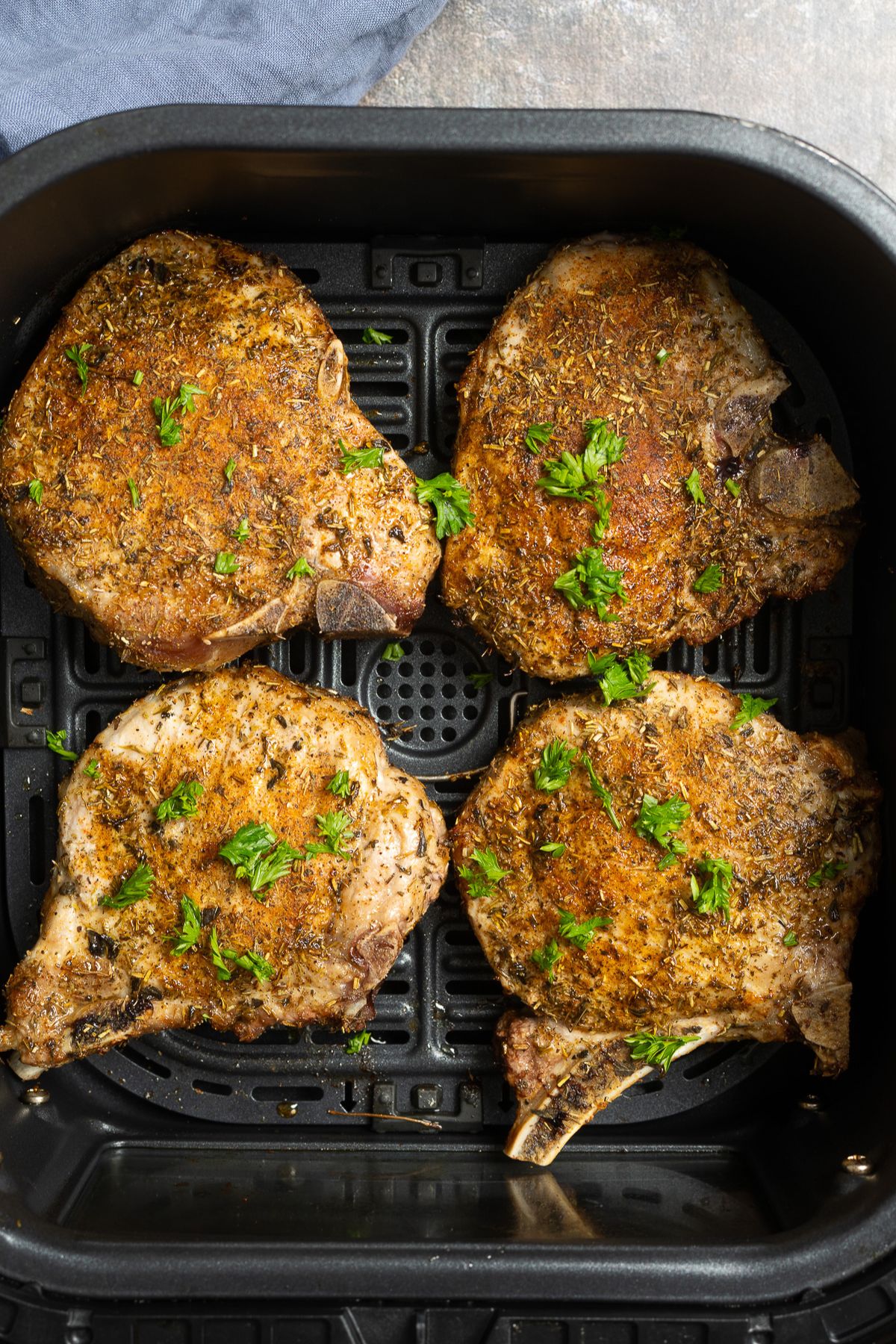
- Preheat the air fryer to 375°F for 3–5 minutes. Preheating gives more even browning.
- Pat chops dry. Brush with 1–2 teaspoons oil per chop. Season with salt, pepper, and preferred spices (garlic powder, smoked paprika, thyme).
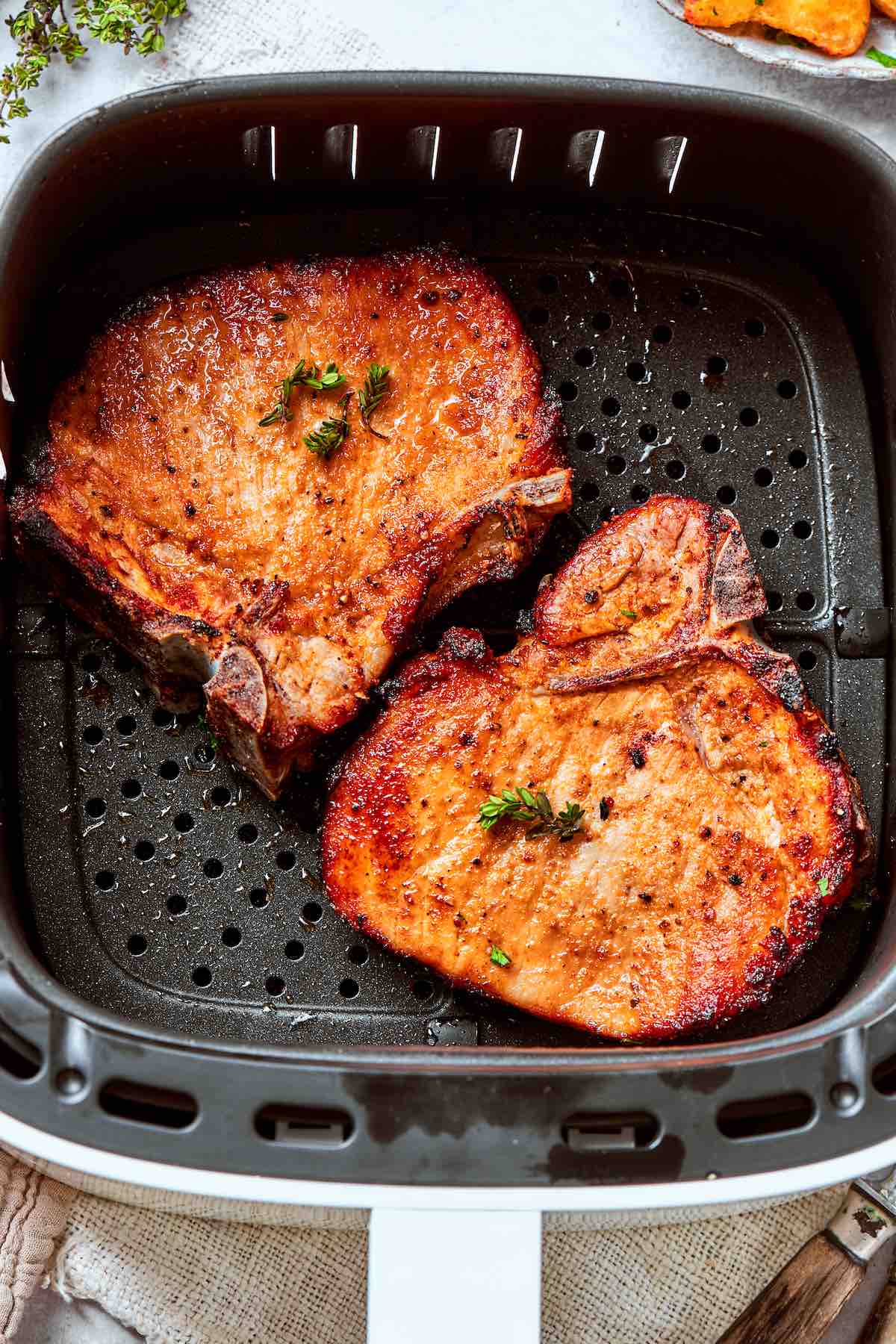
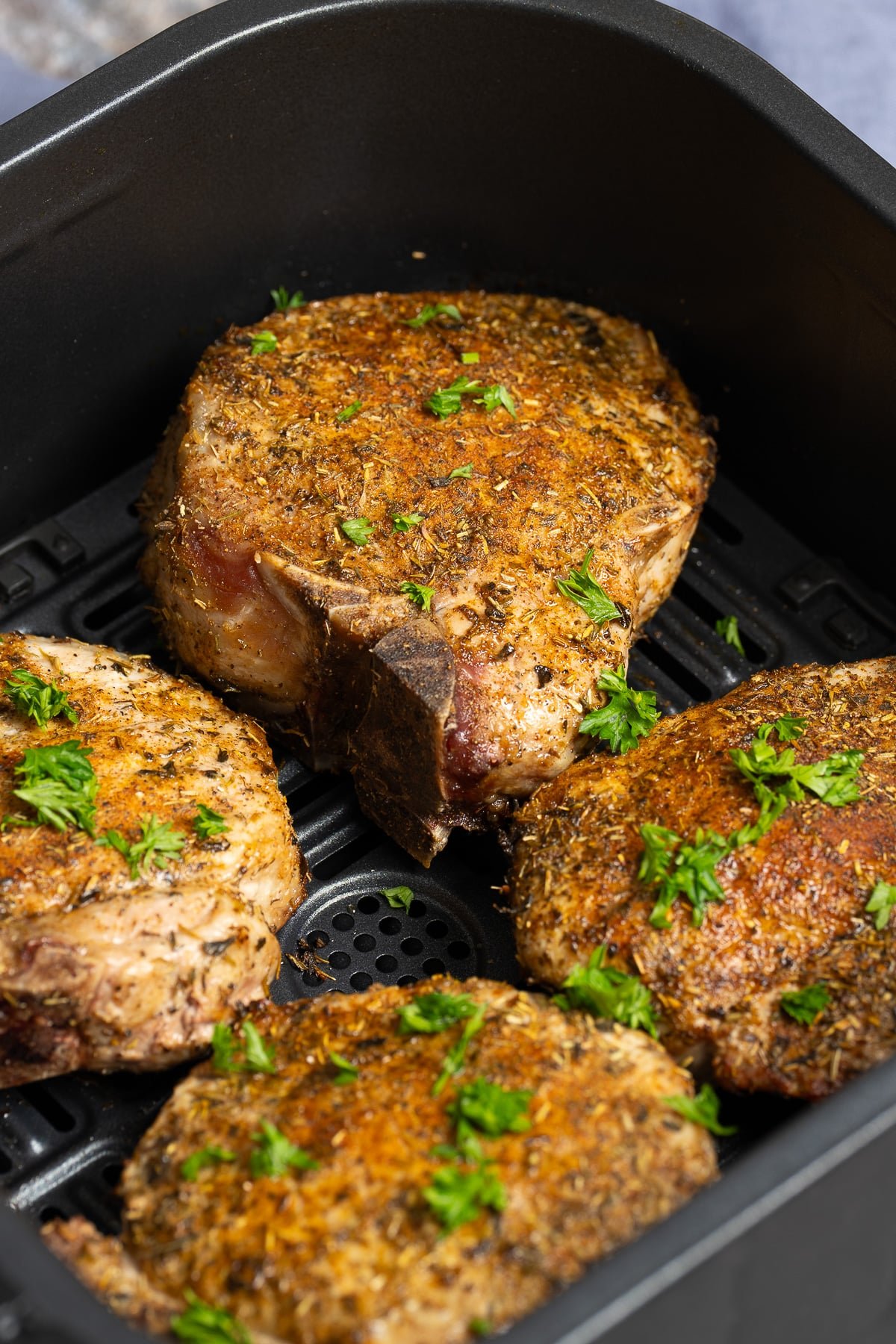
- Place chops in a single layer in the basket. Do not overlap. Leave space for air to circulate.
- Cook at 375°F for about 10 minutes. Flip once halfway at 5 minutes.
- After 10 minutes, check internal temp at the thickest point with an instant-read thermometer. If below 145°F, continue cooking in 2–3 minute increments and recheck. For 1–1.5″ chops the total time is commonly 12–18 minutes.
- When thermometer hits 145°F, remove chops and rest 3 minutes under a loose foil tent. Resting lets juices redistribute and finishes gentle carryover cooking.
Signs of success
- Thermometer reads exactly 145°F in the center after resting for 3 minutes (measured before slicing).
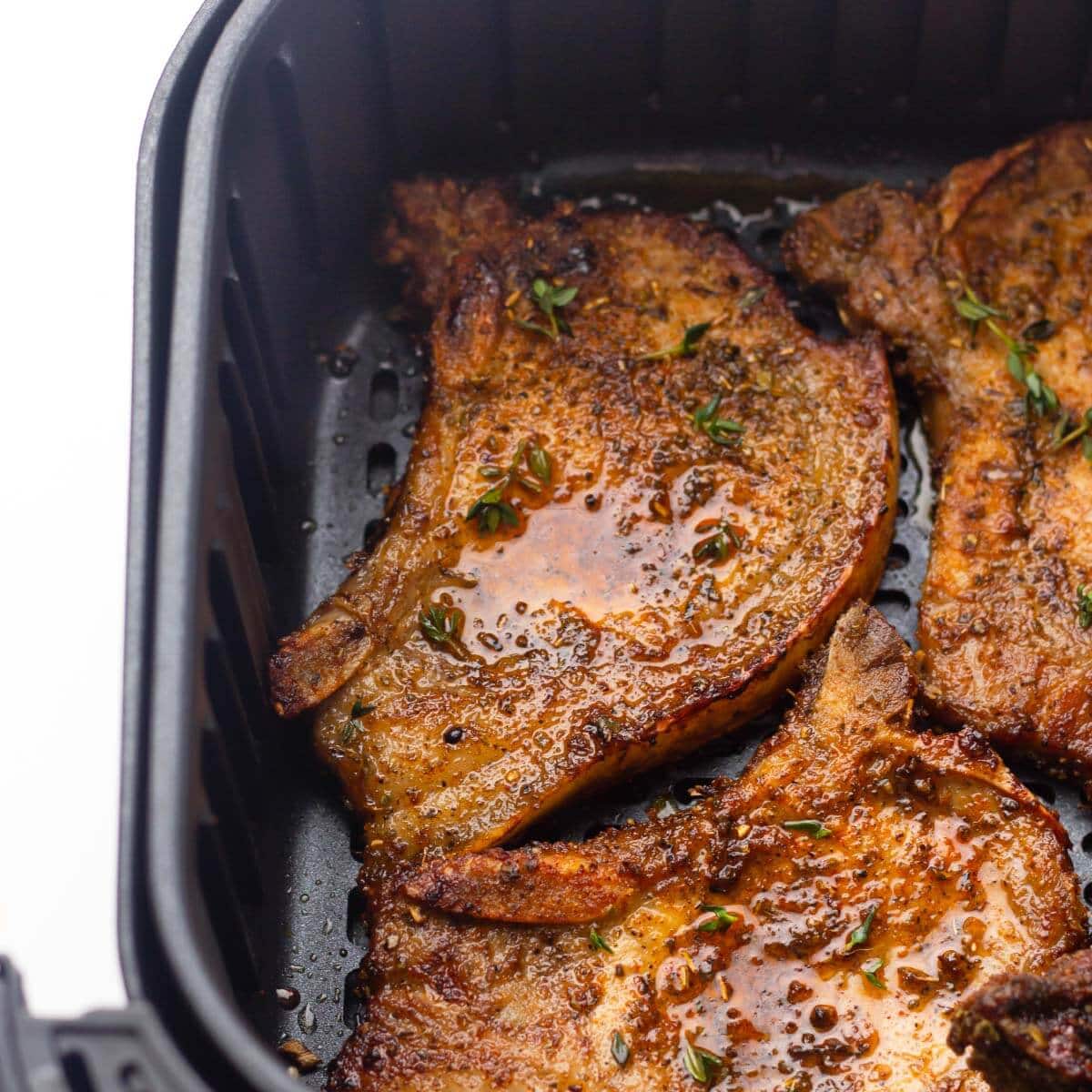
- Exterior is browned and slightly crisp.
- Meat is firm but still springy and juicy when cut.
What to do when the process fails
- Undercooked (temp <145°F): Return to the air fryer at 375°F in 2–3 minute bursts until 145°F. Use thermometer, not time alone.
- Overcooked and dry: Serve with a sauce, gravy, or pan sauce. For future cooks, brine longer or reduce cook temp to 370°F and extend time slightly. Consider covering briefly during rest to retain moisture.
Notes on times and temps
- 375°F is a safe, low-risk start for even cooking and less drying. Use 400°F if you want faster browning for very thick chops but watch temps closely.
- Bone-in chops typically take 1–3 minutes longer than boneless of the same thickness.
Source: airfryerchickenwings.com
Variables, examples, and decision table (choose temp/time for your chop)
Answer: Pick time and temp by chop thickness and bone status.
Decision quick table (typical ranges for 1-inch and 1.5-inch chops)
- 1.0″ boneless: 375°F, total 10–14 min, flip at 5–7 min.
- 1.0″ bone-in: 375°F, total 12–16 min, flip at 6–8 min.
- 1.5″ boneless: 375°F, total 14–18 min, flip at 7–9 min.
- 1.5″ bone-in: 375°F, total 16–20 min, flip at 8–10 min.
Trade-offs and tips
- Higher temp (400°F): Faster browning. Increases risk of overcooking interior. Use for thick chops only if you monitor temp closely.
- Lower temp (350°F–370°F): Slower, gentler cooking. Can be more forgiving and keep pork moister. It takes longer.
- Brining: Adds moisture and gives a buffer against overcooking. Works best for 30 minutes to 2 hours for thick chops.
- Oil and sugar in rubs: aid browning. But sugar can darken fast; reduce temp if exterior browns too quickly.
Example seasoning blends
- Classic: kosher salt, black pepper, garlic powder.
- Smoky: smoked paprika, brown sugar (small amount), cumin, salt.
- Herb: chopped fresh thyme, rosemary, lemon zest, olive oil.
Source: simplyhappyfoodie.com
Common mistakes, exceptions, and safety boundaries
Answer: Avoid relying on time alone, skip the thermometer at your own risk, and prevent cross-contamination.
Common mistakes
- Trusting only the air fryer clock. Air fryer models vary in real temperature and airflow. Always use a thermometer.
- Skipping rest. Cutting early releases juices and lowers perceived juiciness. Rest 3 minutes after reaching 145°F.
- Overcrowding the basket. This causes uneven cooking and weak browning. Cook in batches if needed.
- Using too much sugar in the rub at high temp. The sugar can burn and create off flavors.
Exceptions and limits
- If chops are over 2 inches thick, consider finishing them in a 350°F oven after searing in the air fryer to avoid burning the crust before the center is done.
- Ground pork and very thin cutlets have different USDA targets or cook times; this guide covers whole-cut thick pork chops only.
Safety boundaries
- Minimum internal temp: 145°F with a 3-minute rest per USDA guidance for whole pork cuts in the U.S.
- Use a calibrated instant-read thermometer inserted into the thickest part, not touching bone.
- Refrigerate raw pork within two hours of purchase or after marinating; one hour if ambient temp is above 90°F.
Source: airfryerchickenwings.com
Next questions readers often have and a compact gap map
Answer: Here are likely follow-ups, why readers ask them, and how well competitors cover them.
Note about research limits: I did not browse web pages while creating this article. The gaps below are inferred from common cooking questions, kitchen forums, and typical recipe shortfalls. Use them to decide what to read next.
- Question: “Do I need to brine thick pork chops for air fryer?” — INFERRED NEXT NEED. Many recipes skip brine and yield dry chops. Competitor coverage is often SHALLOW. Benefit: reduces dryness. Answer evidence: common culinary practice; brining salts improve moisture retention. Priority: high. Placement: explained above.
- Question: “Should I preheat my air fryer?” — OBSERVED/INFERRED (both common). Many pages say yes but skip timing. Competitor coverage: MIXED. Benefit: better browning and predictable time. Priority: medium. Placement: method section.
- Question: “How does bone-in vs boneless affect time?” — INFERRED. Competitors mention but rarely quantify. Coverage: SHALLOW. Benefit: helps timing decisions. Priority: high. Placement: variables table.
- Question: “Can I bread thick pork chops for air fryer?” — OBSERVED IN FORUMS. Competitor coverage: MISSING or shallow for thick chops. Benefit: coating affects time and temp. Priority: medium. Placement: separate article suggested.
- Question: “What if my air fryer runs hot or cold by model?” — INFERRED. Competitor coverage: often missing calibration advice. Benefit: avoids overcooking. Priority: medium. Placement: troubleshooting.
If you want, I can inspect specific competitor pages and produce a precise gap map with sources.

Source: inspirationsvalley.com
Key takeaways (short)
- Aim for 145°F internal temp and a 3-minute rest per USDA.
- Preheat the air fryer and use an instant-read thermometer.
- For 1–1.5″ thick chops, expect ~12–18 minutes at 375°F with one flip.
- Brining, oiling, and not overcrowding the basket improve juiciness and browning.
Frequently asked questions (useful unresolved questions)
- Do I need to flip thick pork chops in the air fryer?
Yes. Flip once halfway through to promote even browning and heat distribution. - How do I tell if pork chops are done without a thermometer?
You can look for clear juices and slightly springy texture, but this is unreliable. An instant-read thermometer is the safe, accurate choice. - Can I cook frozen thick pork chops in an air fryer?
You can, but expect 50%–75% longer cook times. Thawing first gives more even seasoning and a better crust. Use a thermometer and watch for uneven cooking. - Will a bone-in chop taste better than boneless?
Bone-in often tastes slightly richer due to marrow and slower heat transfer, but proper seasoning and cooking make both taste great. - Can I use the broil/air-fry combo settings some models have?
Yes. Use the combo cautiously: broil-like modes brown fast and can overcook the interior. Monitor temp and use shorter bursts for browning.
Conclusion and next action
- If you have a specific air fryer model or chop thickness, provide those details and I will give a tailored time/temp plan and seasoning suggestion. If you want, I can also draft a short, printable recipe card you can save to your phone or print.