How To Dispose Of An Air Fryer: Eco Friendly Disposal Guide
If the air fryer still works, donate, sell, or reuse it. If it’s broken, treat it as small appliance electronic waste: remove loose parts, clean it, then recycle via a municipal e-waste program, manufacturer take-back, retailer drop-off, or a scrap metal recycler. Do not assume curbside trash is allowed — check local rules first.
What an “air fryer” is and why disposal matters
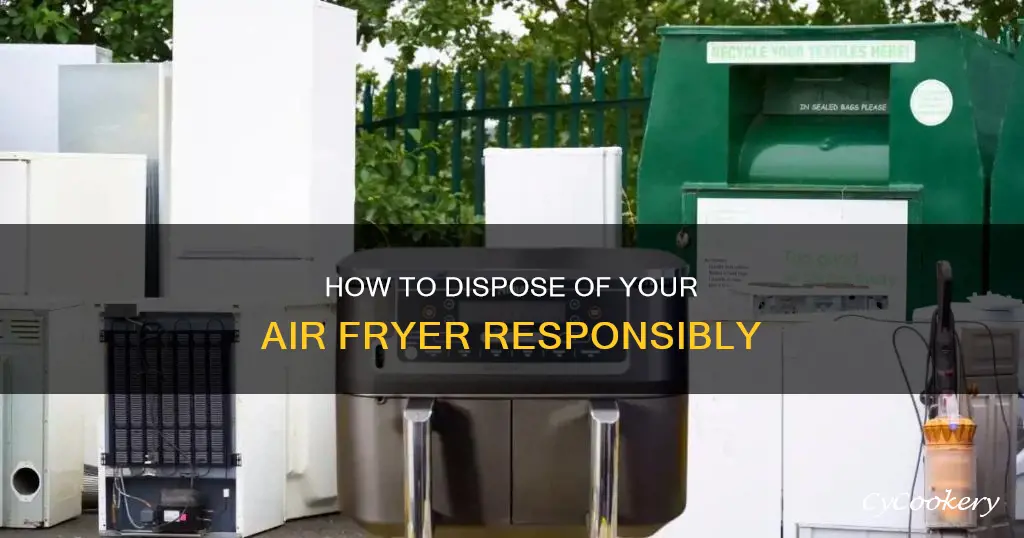
An air fryer is a countertop appliance with a heating element, fan, electronic controls, and metal housing or cooking basket. That mix of metal, plastics, electronics, and (rarely) batteries makes disposal different from tossing simple kitchenware. Proper disposal reduces landfill waste, avoids contamination of recyclables, and may meet local e-waste rules in the United States.

Source: local8now.com
How to decide the right disposal route (fast decision)
Answer: Choose donate/sell if it works; choose recycling or manufacturer/retailer take-back if it’s broken or unsafe to use; use scrap metal recycling if only metal parts remain salvageable; only use curbside trash as last resort when local rules explicitly allow it.
Steps to choose:
- If it powers on and is safe: donate, sell, or give away.
- If it’s broken but intact (electronics and metal present): use e-waste recycling or take-back.
- If it’s crushed, contaminated, or contains a battery: treat as special waste and contact local drop-off.

Source: greenbagpickup.com
Prerequisites — what to do before disposal
- Unplug the appliance and let it cool fully.
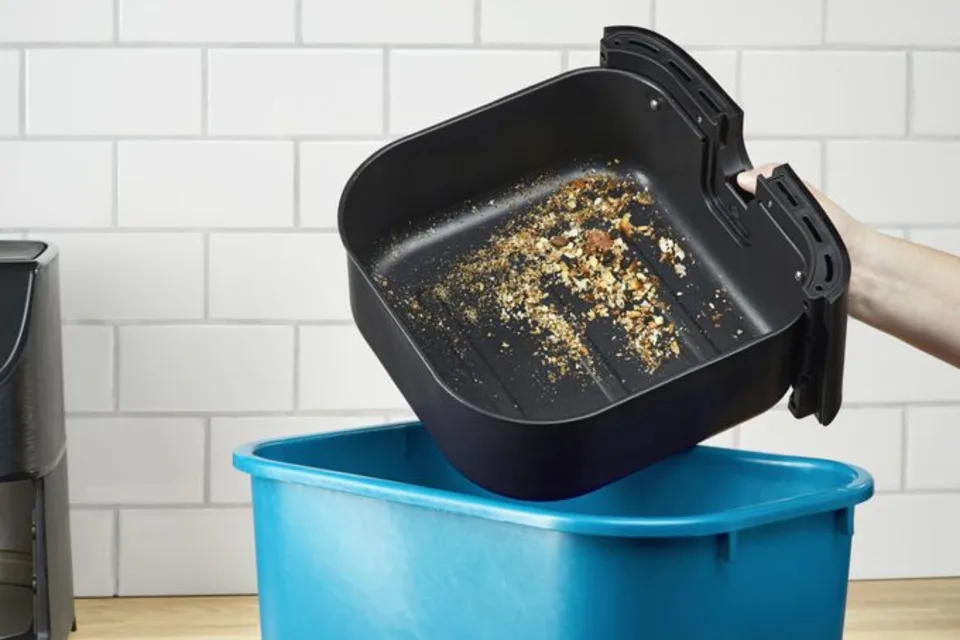
- Remove baskets, trays, liners, and any nonfixed accessories. Clean and dry those parts.
- Check the manual or label for batteries or special components. Most air fryers do not contain lithium batteries, but any detachable battery must be removed and recycled per local battery rules.
- Note model and serial number if you plan to trade in, sell, or check manufacturer programs.

Source: greenbagpickup.com
Practical disposal methods (step-by-step)
Start with the most beneficial option and fall back to others if unavailable.
- Reuse: donate or sell (best for working units)
- Clean the unit and accessories thoroughly.
- Test that it powers on and heats (for listings, disclose condition).
- Donate to charity shops, shelters, community centers, or list on local marketplaces. Many charities will accept working small appliances.
- Pros: extends product life, supports community; cons: recipient safety depends on honesty about condition.
- Manufacturer or retailer take-back
- Contact the manufacturer’s customer service or check its website for take-back or recycling programs.
- Some large retailers offer in-store drop-off or trade-in for small electronics and appliances.
- Pros: simpler disposal, manufacturer may recycle properly; cons: not all brands offer this.
- Municipal e-waste drop-off or collection event
- Search your city/county solid waste or public works site for “electronics recycling” or “household special waste.”
- Schedule a drop-off or find a seasonal collection event that accepts small appliances.
- Pros: widely available in many U.S. communities; cons: rules vary by location and may require residency proof.
- Scrap metal or appliance recycler
- If the plastic/electronic parts are damaged and metal parts are intact, a scrap metal yard may accept the metal housing and heating element.
- Remove nonmetal parts when required by the recycler. Some centers accept whole appliances.
- Pros: recovers metal value; cons: may pay little or nothing, and some centers refuse mixed-material appliances.
- Hazardous or special waste handling (if applicable)
- If the air fryer contains a lithium battery (rare in countertop models) or is contaminated with oil/fuel, handle as household hazardous waste and use a special drop-off.
- Do not puncture or burn battery cells; contact local hazardous waste authority.
- Curbside trash — only if allowed
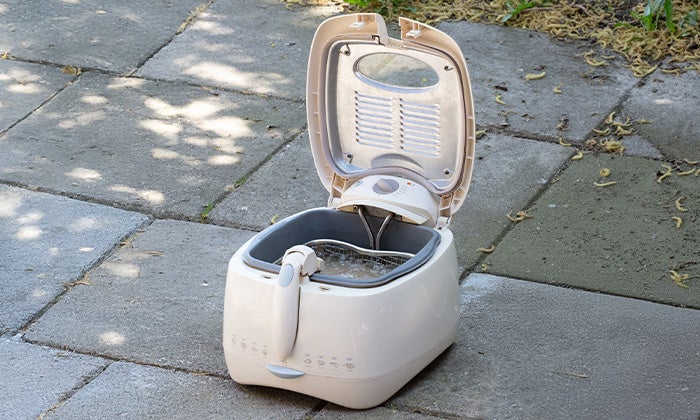
- Many U.S. municipalities forbid disposing of electronics or metal appliances in curbside trash. If your local rules explicitly allow small appliances in trash, do the following: drain and clean the unit, wrap sharp edges, and include it as bulk/large-item pickup using the city’s procedure.
- Pros: easiest where allowed; cons: may be illegal, wasteful, and environmentally harmful.
What to include with drop-off: model name, owner name if required, and whether it’s working. Remove or wipe personal data if your device has smart features or Wi‑Fi (rare but possible).
Source: 1800gotjunk.com
Decision table: best option by condition
- Working, clean, under 5 years: Donate or sell.
- Working but cosmetic damage: Donate or sell with disclosure, or trade in.
- Not working, intact electronics: Municipal e-waste or manufacturer take-back.
- Mechanically destroyed; mostly metal: Scrap metal recycler.
- Contains battery, strong contamination, or unknown components: Household hazardous waste program.
- Local rules allow scrap in curbside: Follow municipality instructions.
Source: cookanswers.com
Signs of success and what to expect
Signs you disposed correctly:
- A charity accepts the unit or a buyer picks it up.
- A recycling center issues a drop-off receipt or confirmation.
- Manufacturer confirms receipt of the device for recycling.
- Scrap metal center pays you or provides a disposal note.
If a recycler or program refuses the unit, ask why: contamination, mixed materials, or safety hazards are common reasons. Remove accessories and try again, or switch to a different program.

Source: aol.com
Common mistakes, exceptions, and safety limits
- Mistake: Tossing an air fryer in regular trash without checking rules. Many U.S. cities restrict electronics and appliances.
- Mistake: Shipping without padding. Air fryers have fragile controls; if shipping to a recycler or buyer, pack carefully.
- Exception: Some community donation centers will not accept appliances older than a certain age or with broken cords. Call ahead.
- Safety limit: Do not attempt to disassemble the appliance’s live electronics if you lack training. Heating elements and capacitors can be hazardous. Hire a technician for battery removal or internal component work.
- Health note: Nonstick coatings on baskets may flake if heavily damaged. Worn nonstick parts should not be reused for food; recycle them instead.

Source: cycookery.com
Troubleshooting: when a recycling route fails
Symptom: Local e-waste drop-off won’t accept the air fryer.
- Likely cause: Program accepts only TVs/computers or limits appliance types.
- Fix: Contact the manufacturer or a nearby scrap metal recycler. Ask about “small appliances” or “kitchen appliances.” Consider private recycling services for a fee.
Symptom: Donation center refuses the unit.
- Likely cause: Nonworking, heavy damage, or safety hazards.
- Fix: Sell for parts, offer for free pickup with disclosure, or send to e-waste recycling.
Symptom: You find a battery inside and are unsure how to remove it.
- Likely cause: Some smart models may include a backup battery.
- Fix: Stop. Contact an electronics repair shop or local hazardous waste authority for safe removal guidance.

Source: topkitchenadvice.com
Future reader questions and competitor gap map (compact)
This map lists practical questions users often search for and whether common online sources cover them well.
- Question: Can I recycle an air fryer in curbside recycling?
- Stage: During disposal. Observed basis: municipal rules vary widely. Competitor coverage: SHALLOW — many pages say “check local rules” without examples. Reader benefit: high. Evidence needed: local waste codes. Priority: High. Placement: Curbside section.
- Question: Do air fryers contain hazardous materials?
- Stage: Decision. Observed basis: consumer safety forums and recycling guides. Competitor coverage: MIXED — some say “no,” some list electronics. Reader benefit: medium. Evidence needed: manufacturer parts lists. Priority: Medium. Placement: Safety section.
- Question: How to prepare an air fryer for donation (sanitize)?
- Stage: Before drop-off. Observed basis: donation center policies. Competitor coverage: MISSING in many pages. Reader benefit: medium-high. Evidence needed: accepted cleaning steps and charity rules. Priority: Medium. Placement: Prerequisites.
- Question: Can I trade an air fryer for store credit?
- Stage: Before disposal. Observed basis: retailer trade-in programs exist but vary. Competitor coverage: SHALLOW. Reader benefit: low-medium. Evidence needed: retailer program terms. Priority: Low. Placement: Manufacturer/retailer take-back.
- Question: What happens to components after recycling?
- Stage: After disposal. Observed basis: e-waste recycling descriptions. Competitor coverage: SHALLOW. Reader benefit: informational. Evidence needed: recycling facility process summaries. Priority: Low. Placement: FAQ/extra resources.

Source: topkitchenadvice.com
FAQs (useful unresolved questions)
- Can I throw my air fryer in the trash?
- Usually not recommended. Many U.S. municipalities restrict electronics and appliances. Check local waste rules first.
- Is an air fryer hazardous waste?
- No in most cases. Typical air fryers do not meet hazardous waste definitions. Treat units with batteries, contamination, or unknown parts as special waste.
- How should I prepare the air fryer for donation?
- Clean all removable parts, test that it powers, and disclose any defects. Include cords and accessories.
- Will a scrap metal yard accept an air fryer?
- Some will, especially if you separate metal parts. Call ahead because policies vary.
- Do manufacturers recycle air fryers?
- Some brands and large retailers offer take-back or recycling. Contact the manufacturer or retailer to confirm.
Next action — concise checklist
- If it works: clean it, then donate or sell.
- If it’s broken: find manufacturer take-back or local e‑waste drop-off.
- If in doubt about batteries or contamination: contact your local household hazardous waste authority.
- Always check city or county waste rules before using curbside trash.
Final note: U.S. rules vary by state and city. If you need a program listing for your exact ZIP code, contact your municipal solid waste office or the store/manufacturer directly for up-to-date, local instructions.