How To Make Hot Pockets In Air Fryer: Easy Crispy Recipe
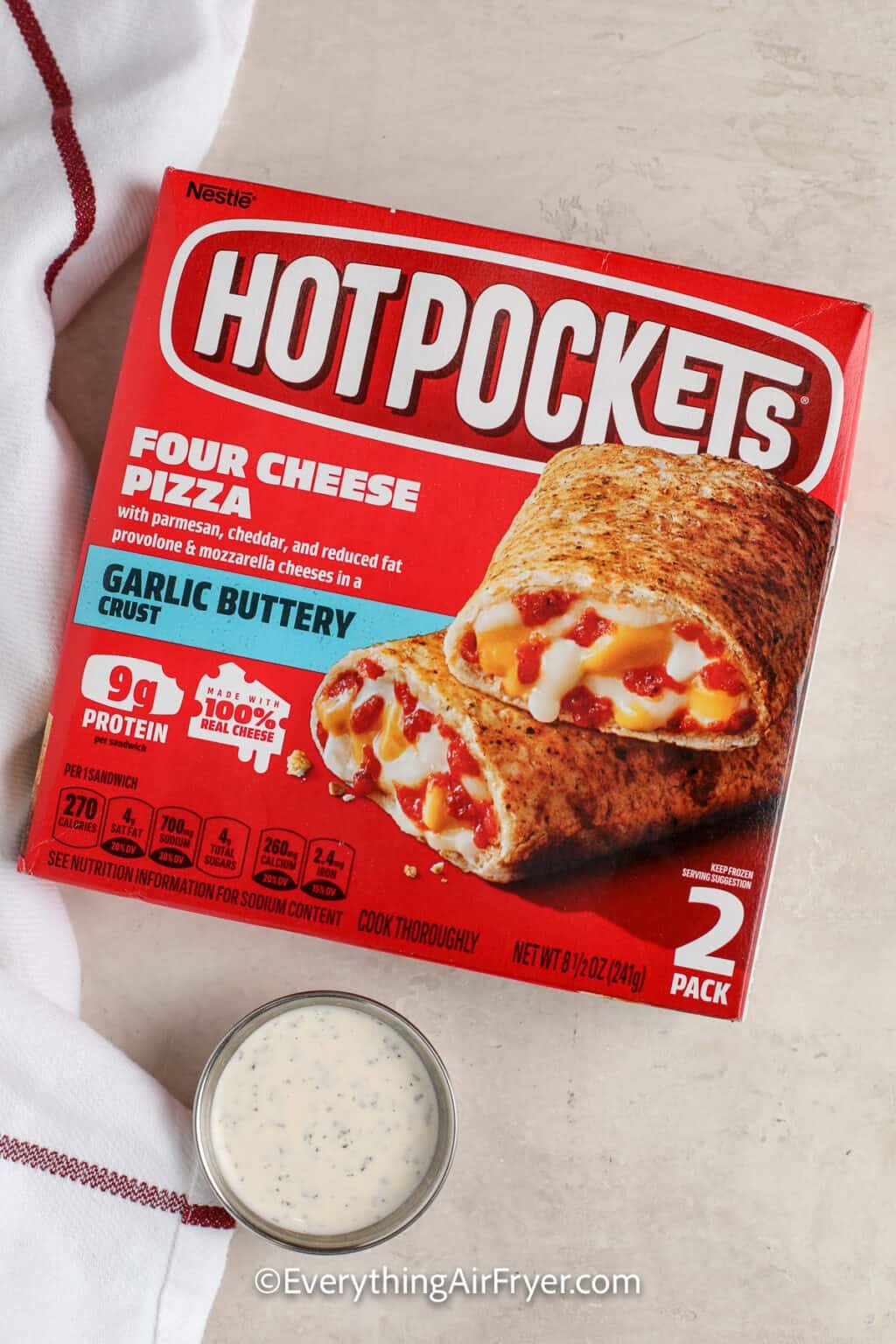
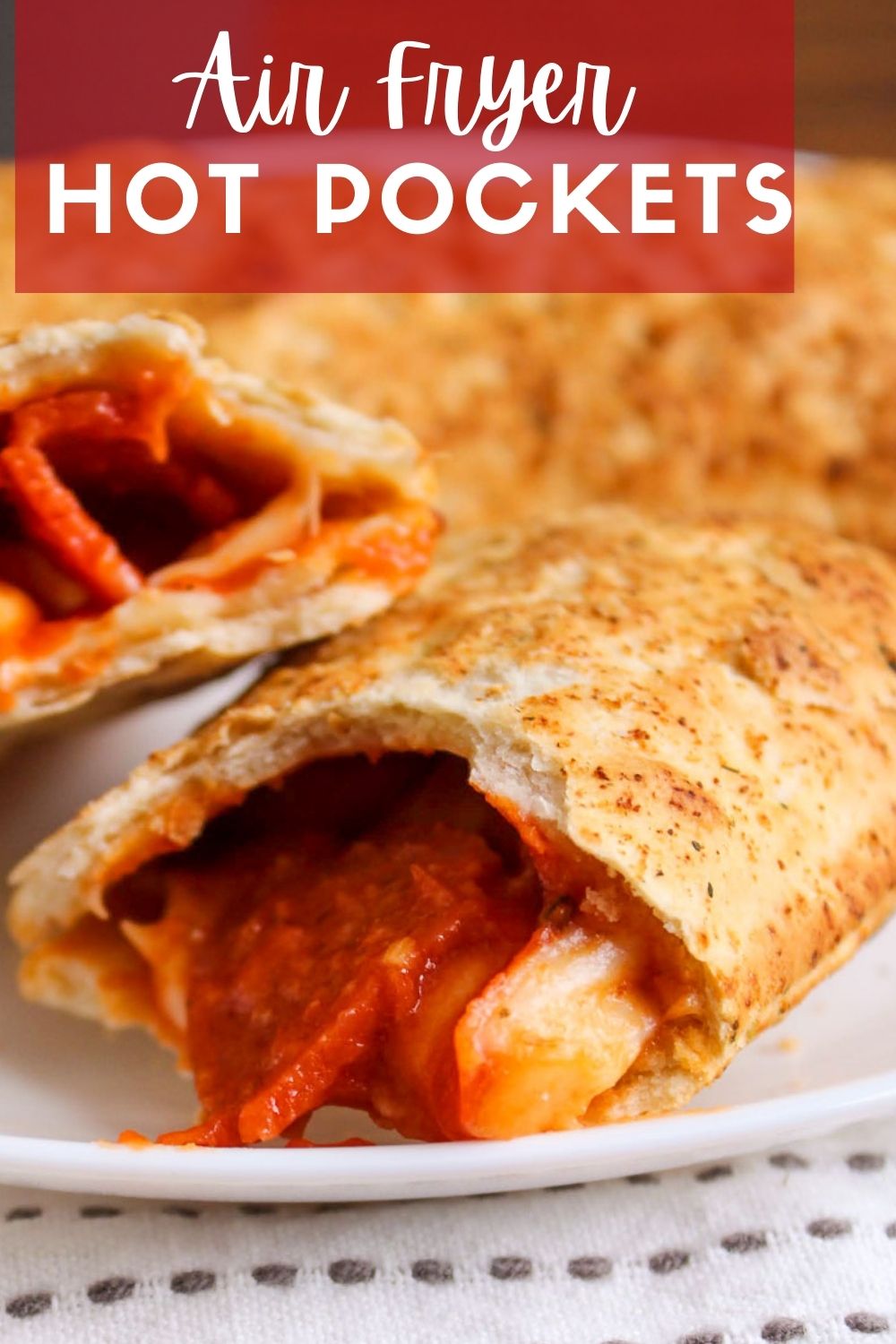
Yes — you can cook frozen or homemade Hot Pockets in an air fryer. For a standard frozen Hot Pocket, set the air fryer to 350°F and cook 10–12 minutes, flipping once halfway. Check the internal temperature; it should reach 165°F before eating. Adjust time for your air fryer model, pocket size, and whether the pocket is thawed.
Introduction (U.S. context)
This guide uses U.S. kitchen norms: Fahrenheit temperatures, USDA safe-food guidance (165°F reheating target), common U.S. frozen Hot Pocket sizes, and typical countertop air-fryer models and power ranges. If you live outside the U.S., convert temperatures to Celsius and verify local food-safety guidelines. This article gives clear, safe steps, timing ranges, troubleshooting, and tips so you get a hot, crisp pocket without a soggy bottom or exploding filling.

What “making Hot Pockets in an air fryer” means (essential context)
Answer: It means heating a pre-made or homemade stuffed pastry until the crust is cooked and the filling is piping hot (165°F). Air fryers use circulating hot air to crisp surfaces faster than conventional ovens. That makes them well-suited to re-crisping frozen pastries while shortening cook time.
Why this matters for U.S. readers
- USDA guidance sets 165°F as the safe reheating temperature for leftovers and ready-to-eat foods.
- Most U.S. frozen Hot Pockets are pre-cooked inside; you’re reheating and crisping, not cooking raw meat.
- Air fryer wattage and basket size vary widely in U.S. homes; timing below uses ranges to fit common models.
What you need (prerequisites)
Answer: A working air fryer, frozen or homemade Hot Pockets, a probe or instant-read thermometer, and basic kitchen tools.
Checklist
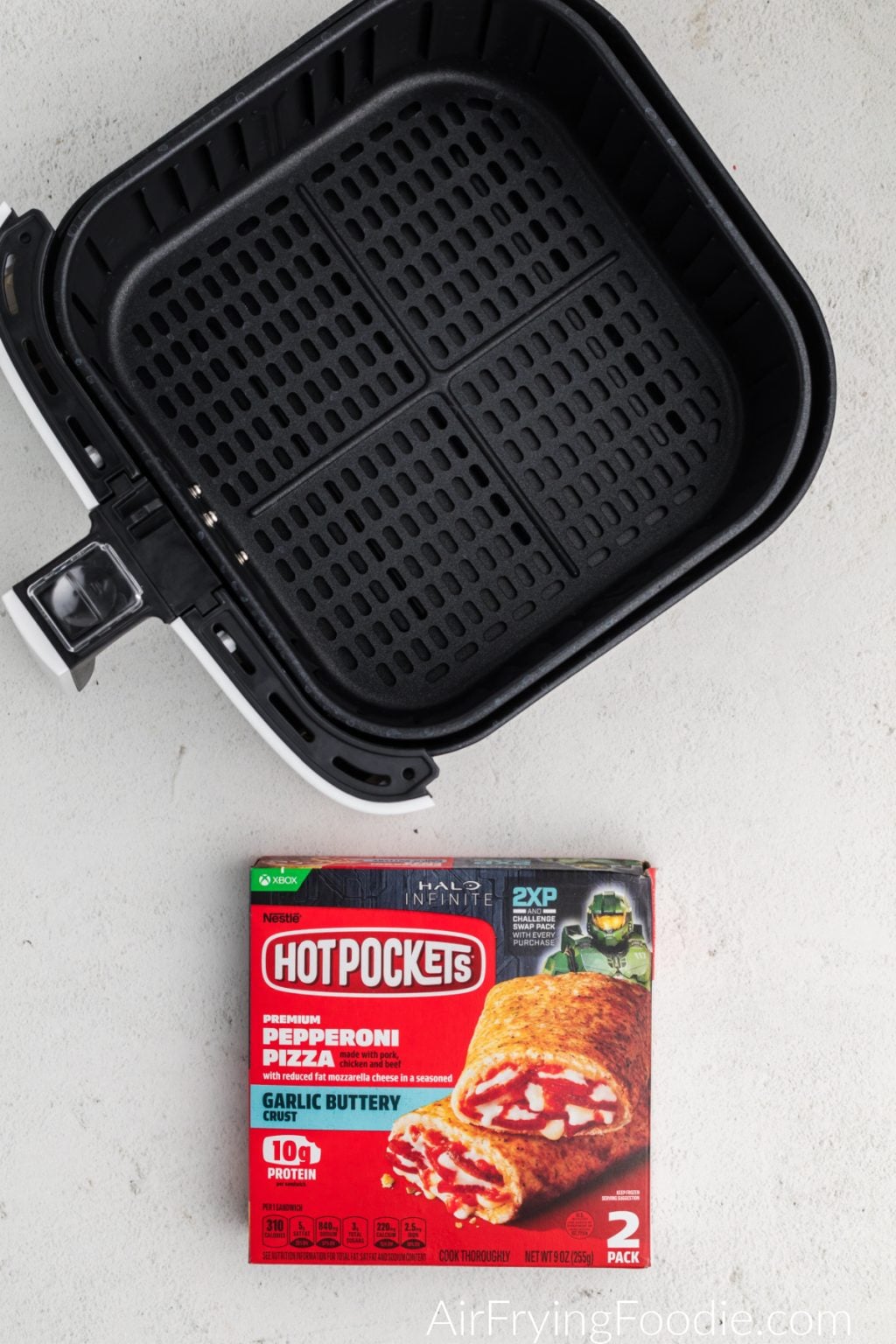
- Air fryer (basket or tray style) — capacity affects batch size and time.
- Frozen Hot Pockets (brand) or homemade stuffed pastry, chilled or frozen.
- Instant-read thermometer (recommended) — confirms 165°F internal temp.
- Tongs, oven mitts, and a small baking sheet or parchment (optional; see notes).
- Optional: spray oil, pastry brush, or egg wash to improve browning.
Safety note: Use Fahrenheit temperatures and the 165°F internal target when reheating in the U.S. Keep hands and face away from steam when opening pockets.

Step-by-step — Frozen Hot Pockets (most common task)
Answer: Cook from frozen at 350°F for 10–12 minutes, flipping once; confirm 165°F inside.
Steps
- Preheat (optional): Preheat the air fryer to 350°F for 2–3 minutes. Preheating shortens total cook time and helps crisping.
- Prep the pocket: Remove packaging. If the pocket is wrapped in a crisping sleeve, remove it unless your sleeve specifically states it’s air-fryer safe. Lightly spray the basket or line with perforated parchment if your model allows — do not block air flow.
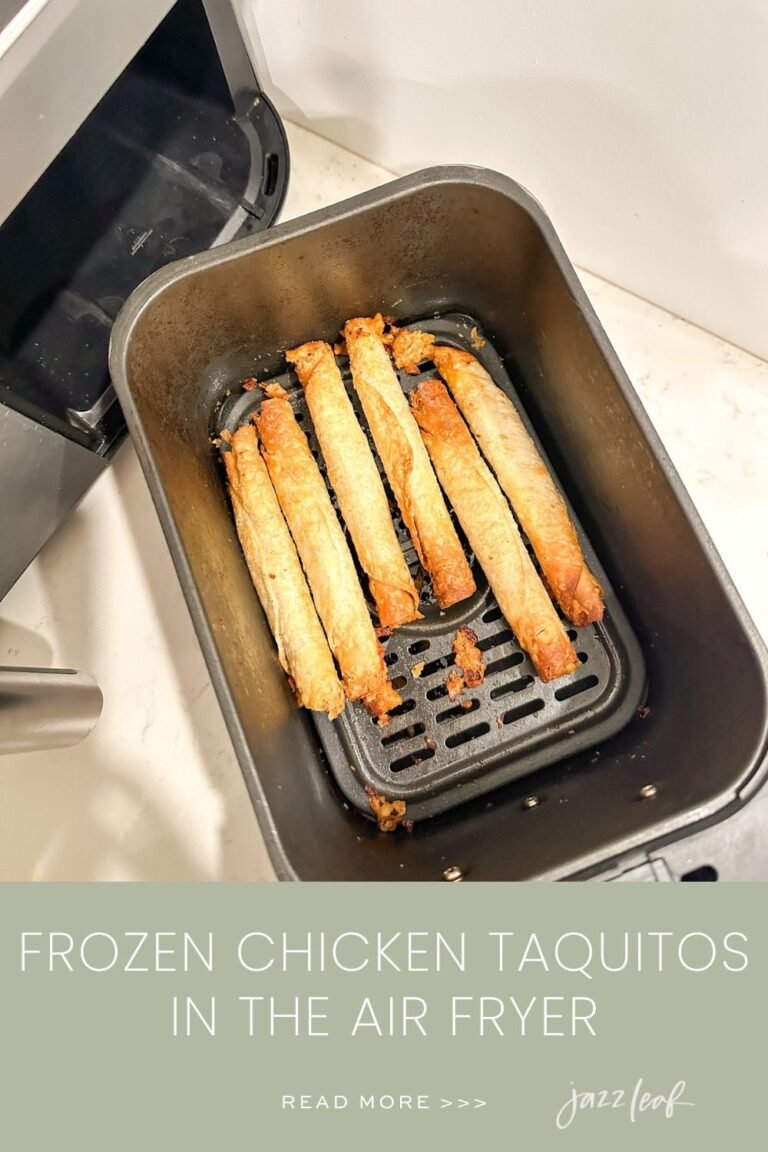
- Arrange: Place the frozen Hot Pocket in the basket single layer. Don’t overlap. Leave space for air to circulate.
- Cook: Set temperature to 350°F. Cook 10–12 minutes total. At 5–6 minutes, open and flip the pocket for even browning.
- Check temp: Insert an instant-read thermometer into the center. Target: 165°F. If it’s below 165°F, return for 1–2 minute increments.
- Rest: Let the pocket sit 1–2 minutes — filling stays very hot and needs this short rest to thicken. Cut carefully to avoid steam burns.
Signs of success
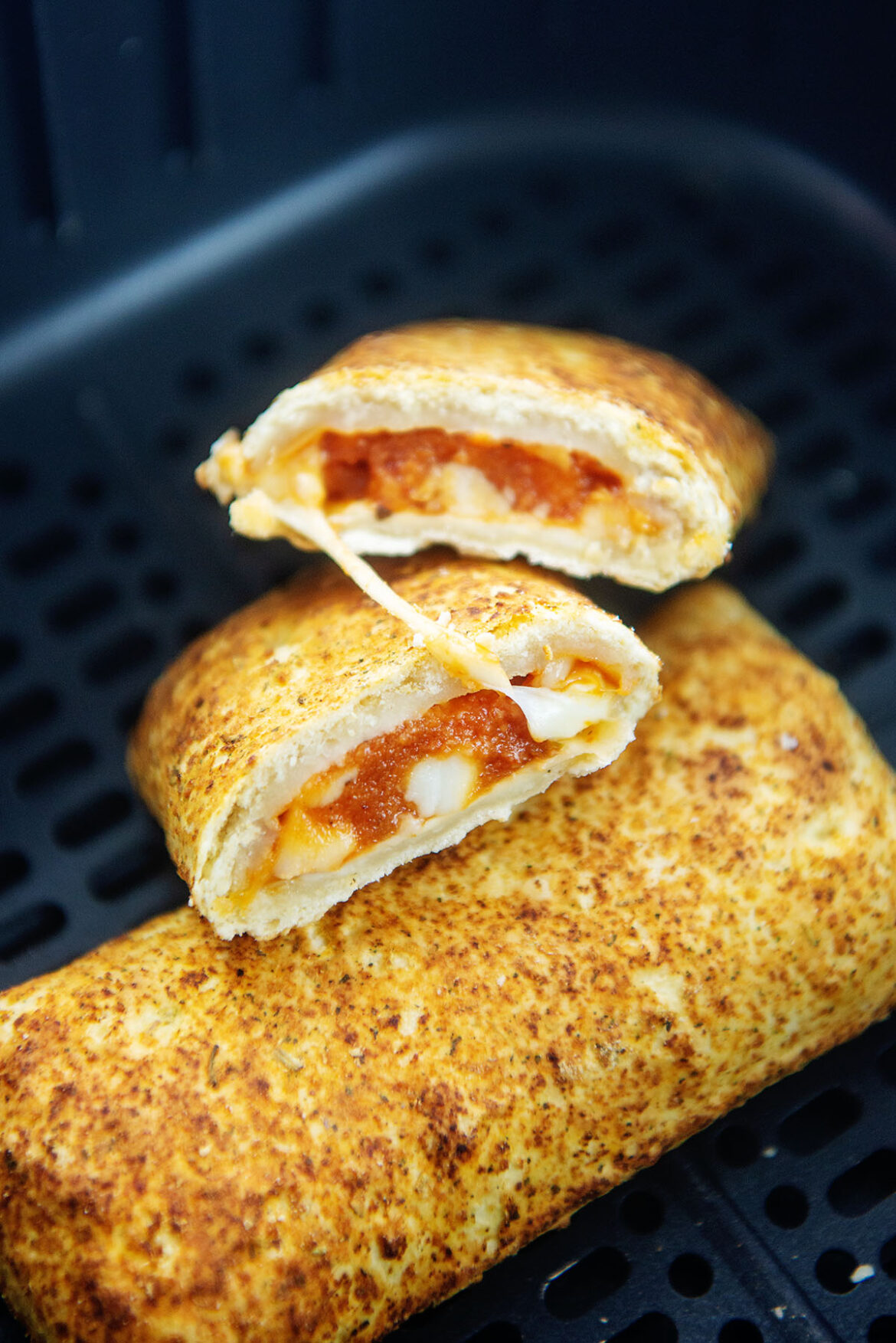
- Golden-brown crust all over.
- Filling steaming and register ≥165°F at the coldest point.
- No soggy bottom; crust is crisp when bitten.
When to adjust
- If the crust is browning too fast and filling is under-temp: lower to 325–330°F and add 2–4 minutes.
- If crust is pale and filling is hot: raise to 375°F for 1–2 more minutes to crisp.

Step-by-step — Homemade Hot Pockets or thawed pockets
Answer: For chilled or room-temperature homemade pockets, cook at 325–350°F for 6–10 minutes depending on size; for frozen homemade pockets, use 350°F for 12–16 minutes.
Steps for chilled or room-temp pockets
- Preheat air fryer to 325–350°F.
- Brush with egg wash or oil for extra brown color.
- Place in basket; do not overcrowd.
- Cook 6–10 minutes, flipping halfway. Check color and crispness.
- Verify 165°F internal for any filling containing meat, poultry, or egg.
For frozen homemade pockets
- Use 350°F and 12–16 minutes. Flip at halfway point. Thermometer check is mandatory for fillings that include raw or partially cooked proteins.

Variables, examples, and decision table
Answer: Time and temp depend on pocket size, filling, crust type, and air fryer power. Use the table below to choose starting settings and adjust by evidence (visual cues and thermometer).
Decision table (use as starting points)
- Small single-serve frozen pocket (brand standard): 350°F — 10–12 min (flip at 6).
- Large or double crust/puff pastry pocket: 350°F — 12–16 min (flip at halfway).
- Thawed or refrigerated pocket (small): 325–350°F — 6–8 min.
- Multiple pockets in large basket (not touching): add 2–4 min to times above.
- If crust browns quickly but filling cold: lower temp 25°F and add 3–5 minutes.
Example scenarios
- Quick snack (single frozen pocket, 150–200W air fryer): 350°F for 11 minutes, flip at 6.
- Family batch (two pockets, roomy basket): 350°F for 12–13 minutes, flip each once.
- Homemade with raw sausage filling (frozen): 350°F for 14–16 minutes; confirm 165°F.

Common mistakes, exceptions, and safety boundaries
Answer: The main mistakes are not checking doneness, overcrowding the basket, and ignoring steam/burn risks.
Common mistakes
- Skipping the thermometer: You can’t rely only on color for internal safety. Always check for 165°F with meat/egg fillings.
- Overcrowding: Pockets that touch won’t crisp evenly. Cook in batches.
- Blocking airflow with non-perforated parchment or foil: That causes uneven cooking. Use perforated liners or place pockets directly on the rack.
- Using too high heat for long: Crust burns before filling heats.
Exceptions and limits
- Crisping sleeves: Some commercial sleeves are not air-fryer safe. Check packaging. If in doubt, remove sleeve.
- Microwaved then air-fried pockets: Microwaving first can cause soggy pockets. If you must, use a short air-fry at 375°F for 2–4 minutes to re-crisp.
Safety boundaries
- Internal temperature must reach 165°F for reheated foods in the U.S. (USDA standard).
- Beware of hot filling and steam when biting or cutting. Let rest. Use a thermometer to confirm safety rather than guessing.

Troubleshooting — Symptoms, likely causes, and fixes
Answer: Match what you see to the likely cause, then apply the fix below.
Symptom: Crust browned or burned but filling still cold
- Likely cause: Temp too high or pocket too large.
- Fix: Lower to 325–330°F; finish for extra time. Tent lightly with foil to slow top browning if needed.
Symptom: Soggy bottom
- Likely cause: Moist filling leakage or trapped steam.
- Fix: Use a perforated parchment or place on a rack so air circulates below. Increase temp by 15–25°F to evaporate moisture near end, but watch for burning.
Symptom: Filling leaking and making basket messy
- Likely cause: Filling overfilled or crust cracked.
- Fix: Clean basket after each cook. For future, seal edges better and chill dough before cooking.
Symptom: Uneven browning
- Likely cause: Not flipping, crowded basket, or hot spots.
- Fix: Flip halfway, avoid crowding, and rotate basket if your model has known hot spots.
Key safety and food-temperature checks
Answer: Verify internal temp and use safe handling practices.
Checklist
- Target internal temp: 165°F (74°C) for reheated foods with meat, eggs, or poultry.
- Use an instant-read thermometer in the center and near the seam where filling may be coolest.
- Rest 1–2 minutes after cooking to reduce burn risk from hot filling.
- Clean the air fryer basket after runs where filling leaked to avoid smoke and rancid residues.
Follow-up questions readers often have — gap map and next steps
Answer: These are the most useful follow-ups readers typically need; marked as INFERRED (no web browsing done in this draft).
-
Question: Can I cook Hot Pockets from the crisping sleeve in an air fryer?
- Stage: During prep.
- Basis: Common forum question (INFERRED).
- Competitor coverage: SHALLOW or MIXED (typical product text warns against different appliances).
- Benefit: Prevents melted sleeve residue and fire risk.
- Answer evidence: Manufacturer packaging varies — if sleeve does not list air fryer, remove it. Priority: High. Placement: Prep rules above.
-
Question: How to avoid cheese blowouts and burning the basket?
- Stage: During cook.
- Basis: INFERRED from community complaints.
- Competitor coverage: OFTEN MISSING tips on sealing and rack usage.
- Fix: Seal seams, use a small tray under basket if dripping, and clean promptly. Priority: Medium. Placement: Troubleshooting.
-
Question: Best temp for extra-crispy crust without overcooking filling?
- Stage: Decision.
- Basis: INFERRED.
- Competitor coverage: SHALLOW.
- Answer: Start at 350°F and finish with a 1–2 minute burst at 375°F if filling is hot. Priority: Medium. Placement: Variables table.
-
Question: Can I air-fry multiple pockets at once? How to scale?
- Stage: Batch cooking.
- Basis: INFERRED.
- Competitor coverage: OFTEN MISSING explicit timing adjustments.
- Answer: Use a single layer with space; add 2–4 minutes when the basket holds two or more. Priority: High. Placement: Variables section.
-
Question: Are there air fryer models or accessories to avoid?
- Stage: Equipment selection.
- Basis: INFERRED.
- Competitor coverage: MISSING specific safety notes about non-perforated liners and convection plate compatibility.
- Answer: Avoid blocking airflow with foil/parchment that fully covers baskets; verify accessories are rated for your model. Priority: Low. Placement: Prereqs and safety.
Note: I did not inspect competitor pages for this draft. I inferred follow-up needs from typical consumer queries. To convert these INFERRED items into OBSERVED QUESTIONS with sources, a short review of 3–5 live web pages (manufacturer FAQ, major cooking sites, and user forums) is recommended.

Key takeaways and next action
Answer: Use 350°F as your base for frozen Hot Pockets, flip halfway, and always verify 165°F internal temperature. Rest briefly before eating.
Next action (concise)
- If you have a frozen branded Hot Pocket: preheat to 350°F, cook 10–12 minutes, flip at halfway, confirm 165°F.
- If you cook frequently in an air fryer: buy an instant-read thermometer and follow the adjustment rules in the “Variables” section.
FAQs — Five useful unresolved questions
Answer each briefly and distinctly.
Q1: Can I cook Hot Pockets directly from frozen in an air fryer?
A1: Yes. Use 350°F and 10–12 minutes for a standard frozen pocket. Verify internal temp 165°F.
Q2: Do I need to preheat my air fryer?
A2: Optional. A 2–3 minute preheat to 350°F helps crisping and gives more consistent timing.
Q3: How many Hot Pockets can I cook at once?
A3: One per layer without overlap. If your basket fits two side-by-side with space, add 2–4 minutes to the time. Avoid stacking.
Q4: How do I avoid a soggy bottom?
A4: Use a perforated liner or place pockets on the air fryer rack. Cook at the suggested temp and finish with a slightly higher temp for 1–2 minutes if needed.
Q5: What if the filling is boiling out and making a mess?
A5: Clean the basket after cooking. For future cooks, seal seams better, chill dough before baking, and place a small tray or foil-lined catcher under the basket (don’t block airflow).
Conclusion (concise)
Air frying Hot Pockets gives faster, crisper results than a conventional oven when you use the right temperature, allow airflow, and confirm internal temperature reaches 165°F. Start at 350°F for frozen pockets, flip once, and use an instant-read thermometer. Adjust time for size, batch, and your air fryer’s power.
If you want, I can: tailor exact timings to your air fryer model (brand and basket size), or provide a printable quick-reference timing card you can stick on your fridge. Which would you prefer?