How To Cook Salmon From Frozen In Air Fryer: Quick Guide
Yes. You can cook salmon from frozen in a US home air fryer safely and quickly. Set the air fryer to 400°F, arrange the frozen fillets in a single layer, and cook about 8–15 minutes depending on thickness. Verify doneness with an instant-read thermometer; the USDA recommends 145°F for cooked fish.
Why this works and important safety context
Air fryers move hot air fast. That airflow cooks the outside and heats the center more quickly than a pan alone. Cooking from frozen is safe when you reach the right internal temperature. The USDA recommends a final internal temperature of 145°F (63°C) for fish measured at the thickest part. Use an instant-read thermometer. Do not guess by time alone. Thin fillets need less time. Thick steaks need more.
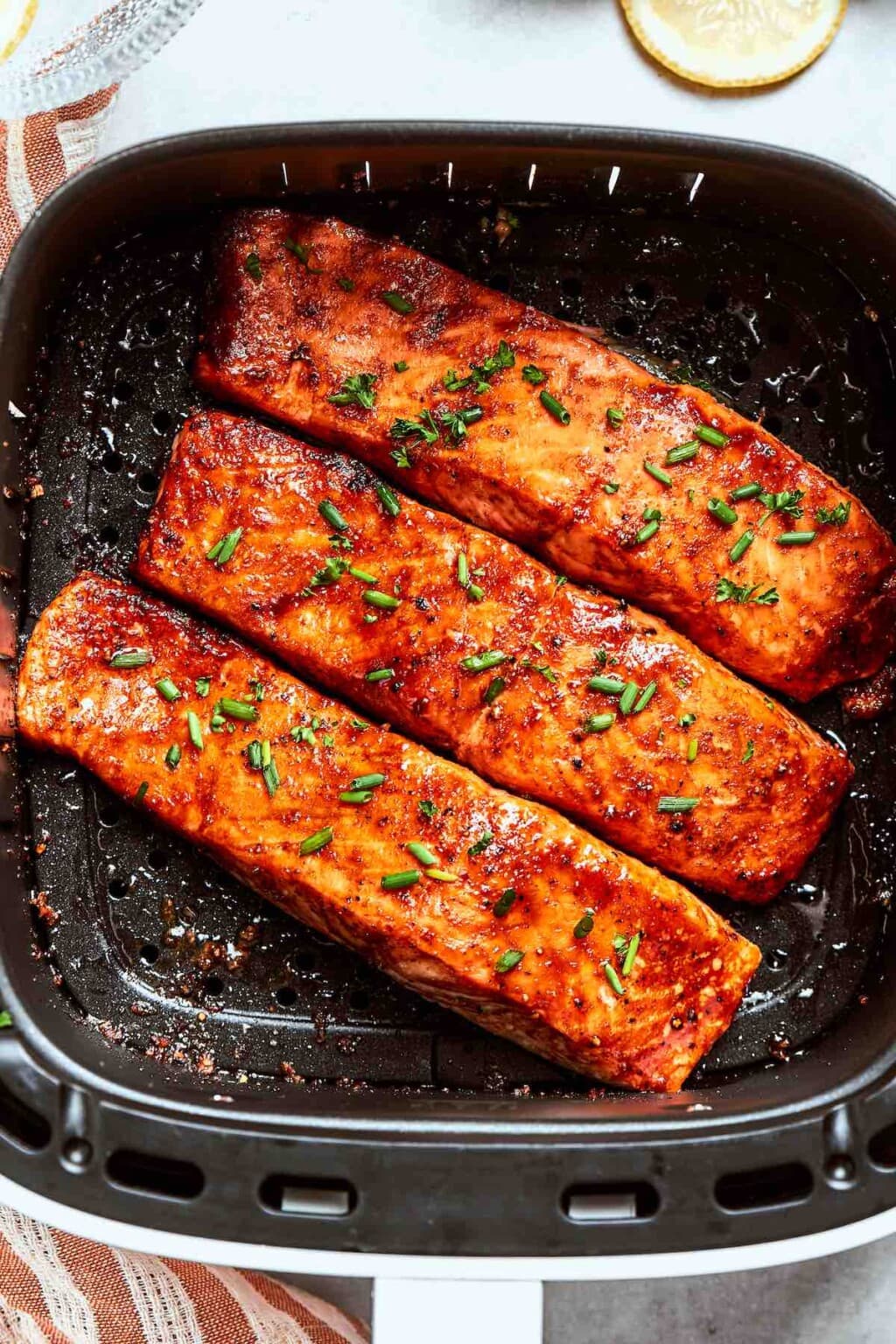
What you need (prerequisites and tools)
You will need:
- An air fryer sized to hold salmon in a single layer. Basket-style or tray-style both work.
- An instant-read thermometer (reads in Fahrenheit).
- A small brush or spray for oil.
- Salt, pepper, and any dry seasonings, or a simple glaze.
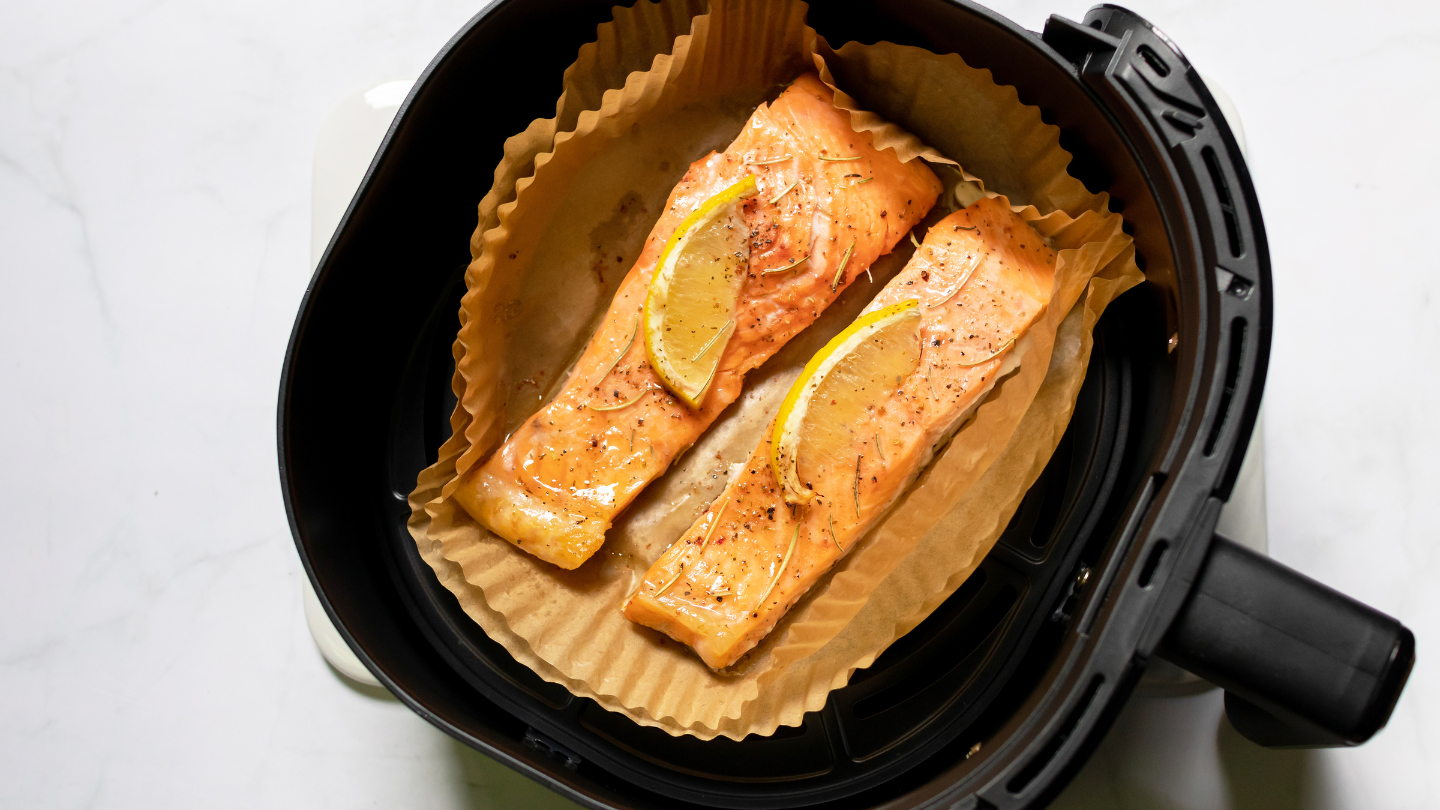
- Parchment with holes or a nonstick basket surface (optional).
- Frozen salmon fillets or steaks. Note whether they are skin-on or skinless.
- A plate and tongs for safe handling.
Notes:
- Use USDA guidance: cook to 145°F. Keep food-safe practices. Do not let cooked salmon sit at room temperature for more than 2 hours.
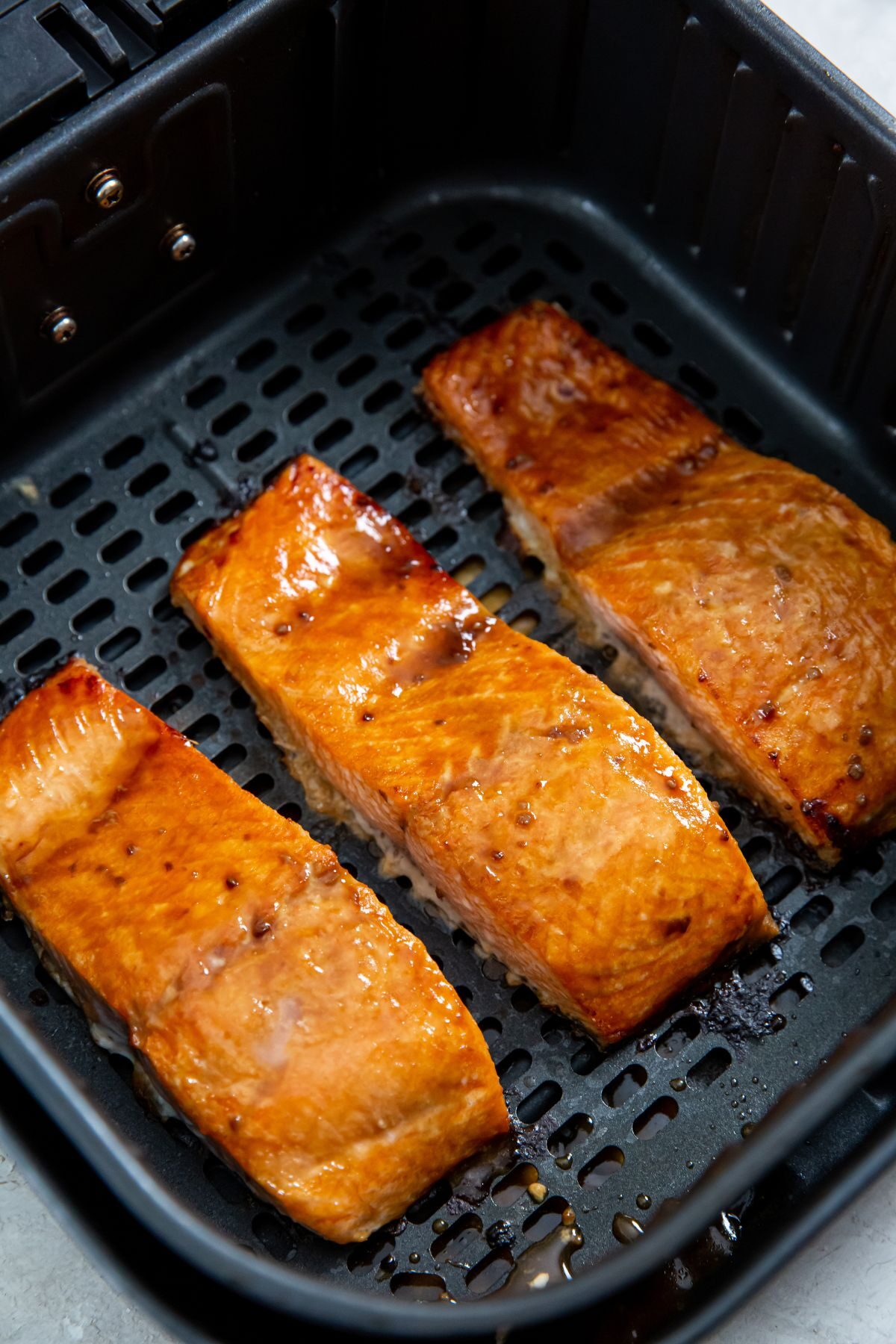
Step-by-step method: cook frozen salmon in an air fryer
Answer: Preheat, oil and season, arrange single layer, cook at 400°F, check temperature, rest 3 minutes.
Steps:
- Preheat the air fryer to 400°F for 3 minutes. Preheating improves browning and time predictability.
- Remove any packaging from the frozen fillets. Do not thaw unless you prefer to.
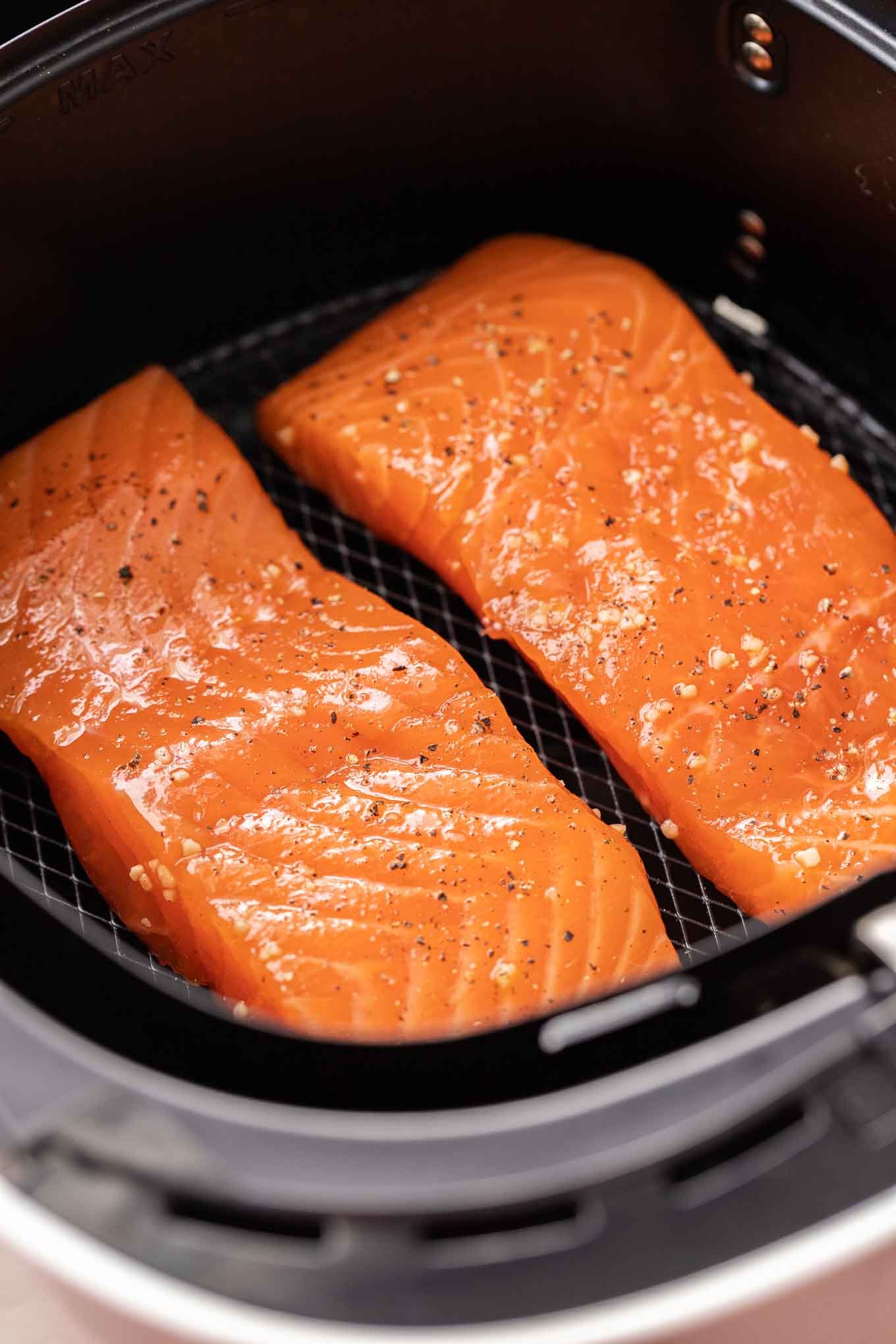
- Lightly brush or spray both sides with oil. Oil helps seasoning stick and yields a better crust.
- Season simply: salt and pepper. Add garlic powder, smoked paprika, or lemon pepper if desired.
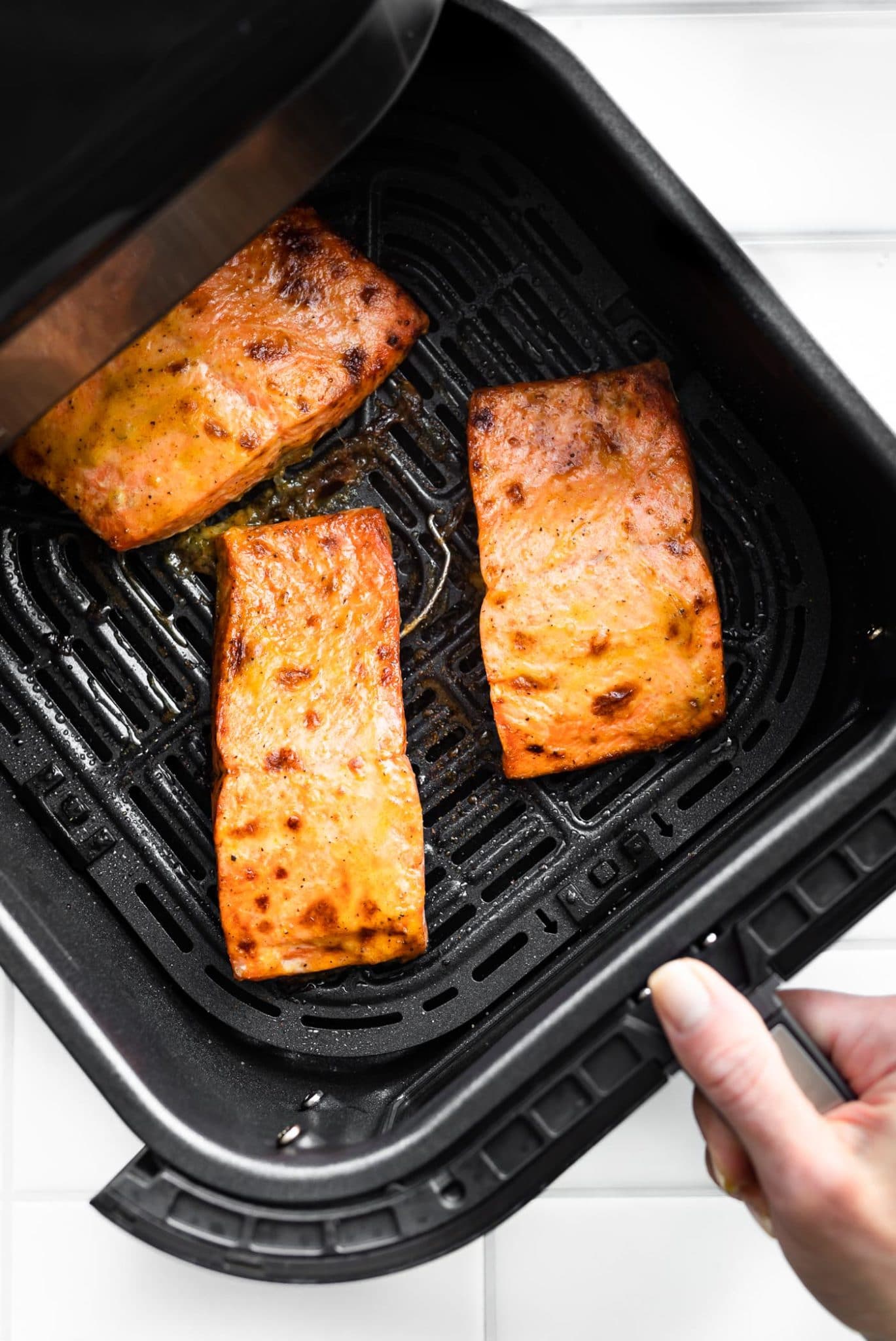
- Place fillets skin-side down (if skin-on) in a single layer. Do not stack or crowd.
- Cook at 400°F. Use the time chart below based on thickness.
- After the lower-bound time, check internal temp at the thickest point with an instant-read thermometer. If <145°F, return to air fryer and check every 2 minutes.
- When the center reaches 145°F, remove and rest 2–3 minutes. Resting evens juices and completes carryover cooking.
- Serve with lemon, a sauce, or your chosen sides.
Signs of success:
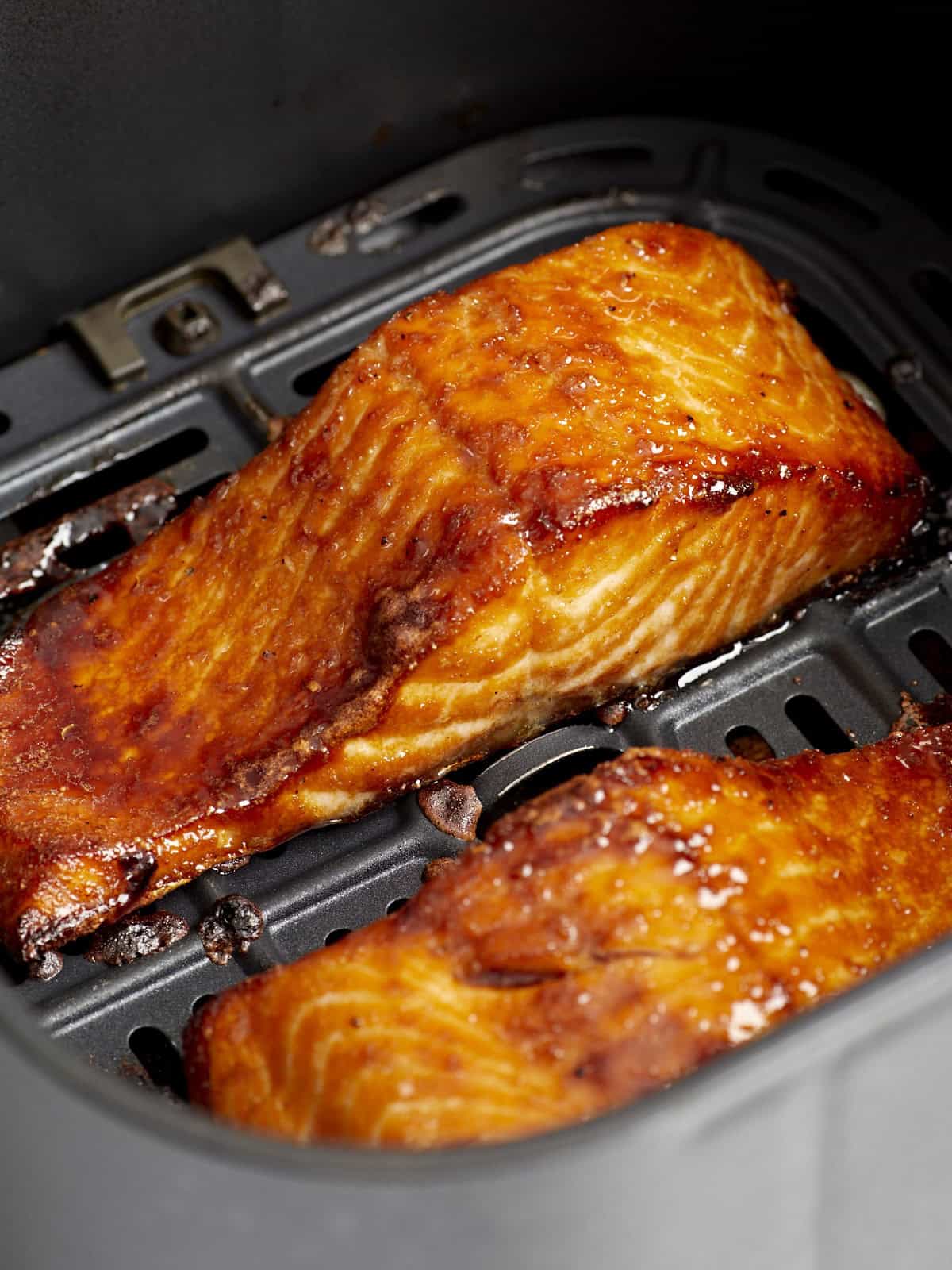
- Center reaches 145°F.
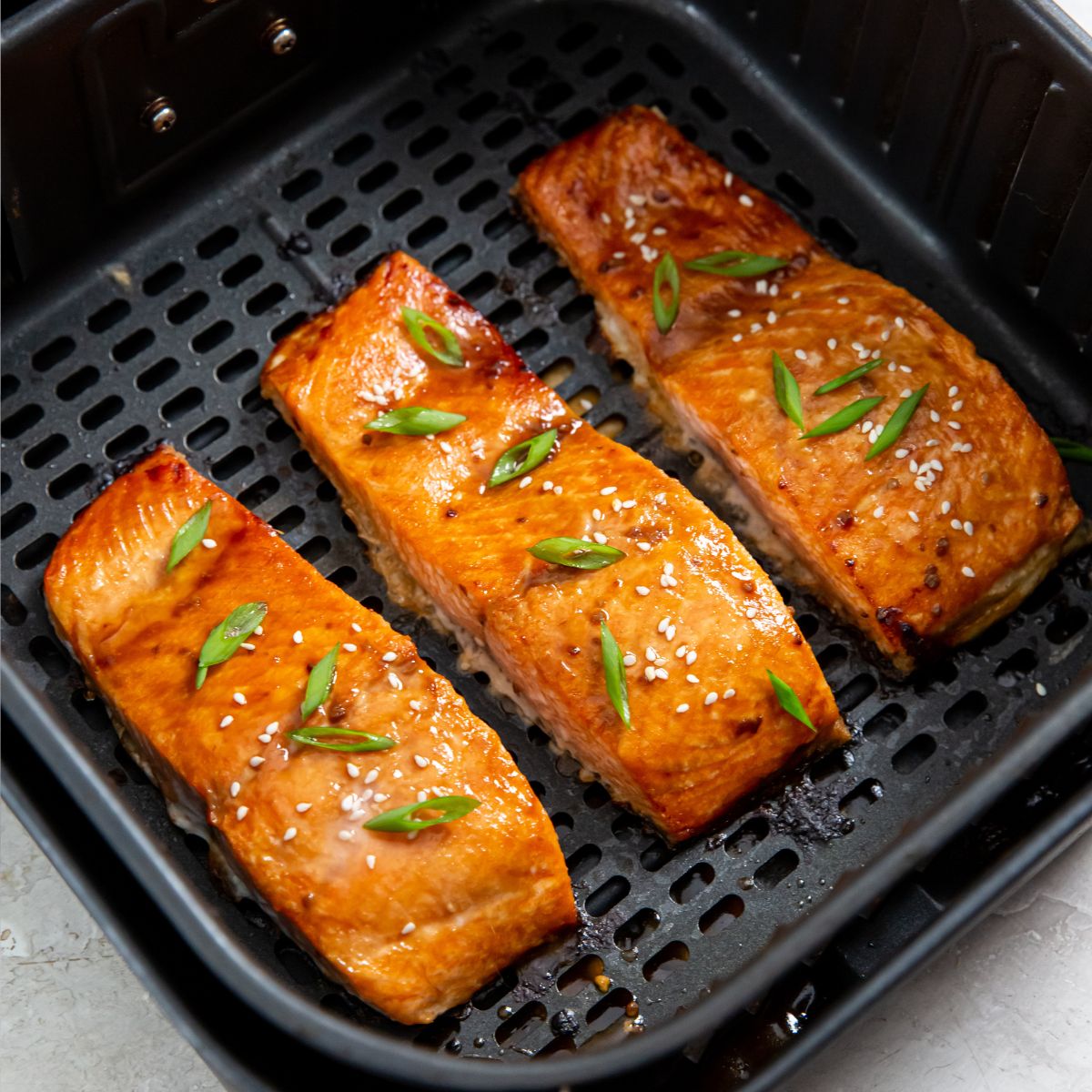
- Flesh flakes easily with a fork but remains moist.
- Skin is crisp if skin-on.
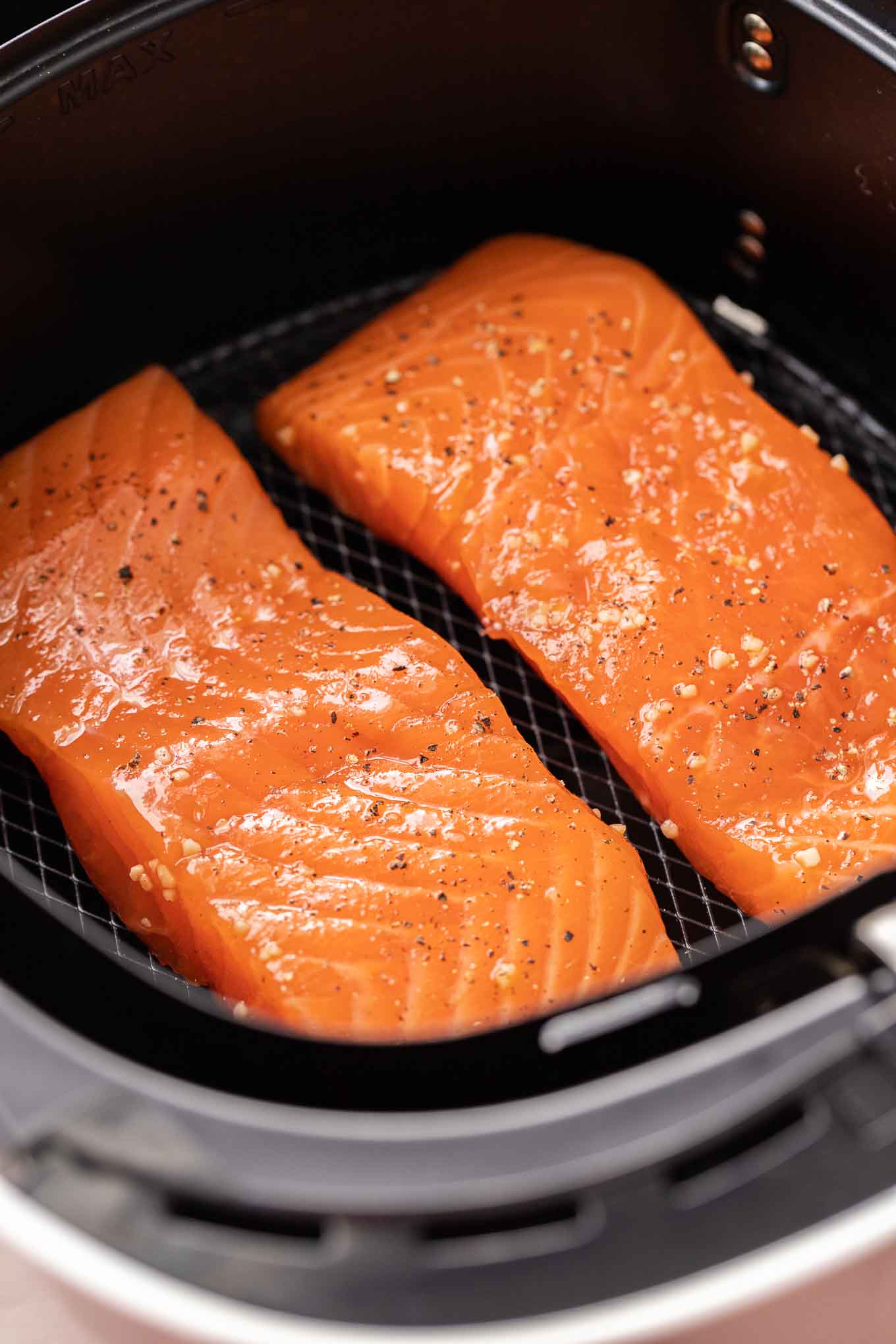
Time and temperature guide (variables and examples)
Answer: Time depends mainly on fillet thickness and whether the fillet is skin-on or skinless.
Use this guide as a starting point for a 400°F cook:
| Fillet thickness (at thickest point) | Typical cook time at 400°F |
|---|---|
| 0.5 inch (1.3 cm) | 6–8 minutes |
| 1.0 inch (2.5 cm) | 8–10 minutes |
| 1.25–1.5 inch (3.2–3.8 cm) | 10–15 minutes |
| 2.0 inch (5 cm) steak or very thick | 15–18+ minutes; check often |
Adjustments:
- Skin-on: often crisps faster; place skin-side down. Time similar or 1–2 min less for crisp skin.
- Seasoned or glazed frozen blocks: glaze may slow heat penetration. Start with the high end of time range and check temp.
- Crowded basket: add 20–30% more time. Better: cook in batches.
Examples:
- A 6 oz (170 g) 1-inch fillet frozen: start at 9 minutes, check temp.
- A 10 oz (285 g) 1.5-inch steak frozen: start at 13 minutes, check.
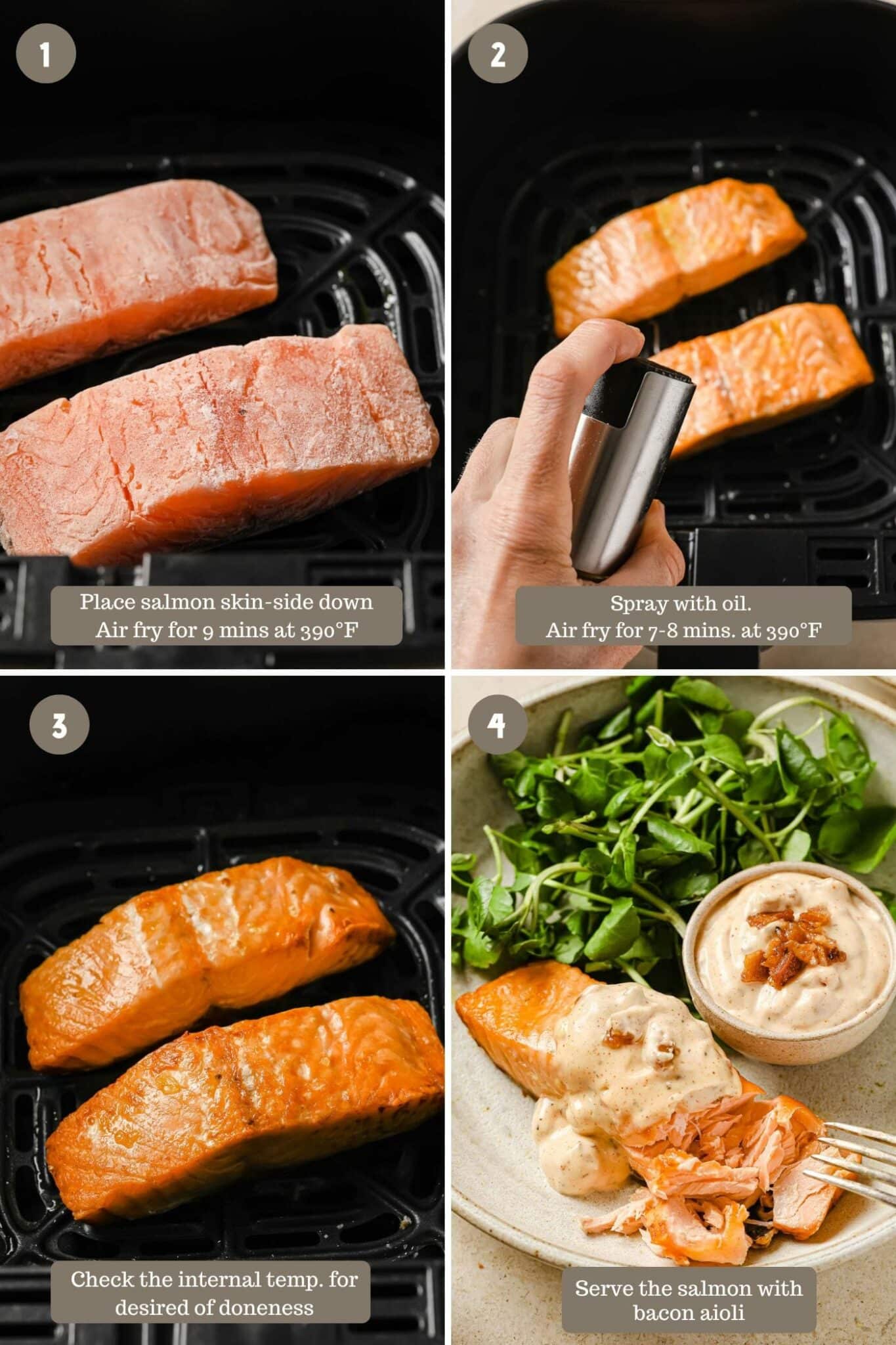
Common mistakes, exceptions, limitations, and safety boundaries
Answer: The most common issues are undercooking the thick center, overcooking the edges, crowding, and incorrect temperature checks.
Avoid these mistakes:
- Relying on time alone. Always use an instant-read thermometer.
- Cooking crowded fillets. Crowding causes uneven airflow and longer times.
- Using very high sugar glazes from frozen without monitoring. Sugars can char the outside before the center reaches 145°F.
- Skipping preheat. Preheat helps predictable cook times.
- Leaving cooked salmon at room temperature more than 2 hours. Refrigerate leftovers within 2 hours.
Exceptions:
- If your recipe requires a lower finish temperature (some chefs prefer 125–130°F for medium-rare salmon), that is a culinary preference, not USDA food-safety guidance. For vulnerable people (pregnant, elderly, immunocompromised), follow the 145°F guideline.
Limitations:
- Very large frozen blocks or tightly vacuum-sealed frozen globs may need partial thawing for even cooking.
- Air fryer models vary. Temperatures can run 10–25°F different between units. Rely on internal temp.
Troubleshooting: symptoms, causes, and fixes
Answer: Identify the symptom, then apply the most useful, safe fix first.
Symptom: Center still raw after recommended time.
- Most likely cause: fillet thicker than assumed or crowded basket.
- Fix: Continue cooking at 400°F and check every 2 minutes. Use the thermometer. If outside browning is too dark, lower to 375°F and finish until 145°F.
Symptom: Salmon is dry.
- Cause: Overcooked or too long at high temp.
- Fix: Reduce future time 1–3 minutes. For current batch, serve with sauce or butter to add moisture.
Symptom: Bottom stuck to basket.
- Cause: No oil or porous basket.
- Fix: Use a light oil spray or perforated parchment next time. Gently loosen with a thin spatula.
Symptom: Outside burnt, center underdone.
- Cause: High sugar glaze or too high temp for thick fillet.
- Fix: Lower temp to 375°F and finish cooking. Tent loosely with foil after removing to avoid further charring.
Symptom: Uneven browning between fillets.
- Cause: Different thicknesses or placement too close to heating element.
- Fix: Arrange similar sizes together. Rotate or swap positions halfway through.
Follow-up questions and next actions
Answer: After you can cook from frozen, try seasoning, sauces, and storage safely.
Next actions:
- Test your air fryer with a 1-inch fillet and your thermometer. Record the time needed for 145°F. This gives a model-specific baseline.
- Try a simple glaze: mix 1 Tbsp honey, 1 Tbsp soy sauce, 1 tsp mustard. Brush in last 2–3 minutes to avoid burning.
- Plan sides that finish at the same time: air-fried asparagus or roasted potatoes.
- Store leftovers in the fridge within 2 hours. Eat within 3–4 days. Reheat to 165°F when serving leftovers for food safety.
FAQs
Q1: Can I cook salmon from frozen without preheating the air fryer?
A1: Yes, but preheating gives more predictable browning and shorter cook times. If you skip preheat, add about 2–3 minutes to the total time and check internal temp.
Q2: Do I need to thaw frozen salmon before marinating?
A2: For best flavor absorption, thaw first. You can add dry seasoning to frozen fillets. If you must use a wet marinade, thaw in the fridge first or expect uneven flavor penetration.
Q3: Is it safe to cook frozen salmon at a lower temp for longer?
A3: Yes, as long as the center reaches 145°F. A lower temp like 375°F can help prevent burning on the outside. Monitor the internal temp.
Q4: Can I cook a frozen whole side of salmon in an air fryer?
A4: Most household air fryers are too small for a whole side. If it fits, expect much longer, uneven cooking, and higher risk of underdone center. Better to fillet or use an oven.
Q5: Will frozen skin-on salmon produce crisp skin?
A5: Yes. Dry the skin surface as much as possible (pat briefly after the first minute if needed), oil, and place skin-side down. Crisping may take the same or slightly less time than skinless.
Conclusion — Key takeaways
Cooking salmon from frozen in a US home air fryer is fast and safe when you:
- Preheat the air fryer.
- Use 400°F as a starting point.
- Cook by thickness, not by time alone.
- Verify doneness with an instant-read thermometer and reach 145°F.
- Avoid crowding and watch for burnt glazes.
Do a quick test cook with one fillet to learn your specific air fryer. Once you know the timing, frozen salmon becomes a reliable, quick weeknight protein.